Archive for June, 2009

Solar Impulse: Around the World in a Solar Plane!

If the Swiff adventurer Dr. Bertrand Piccard, who made history in 1999 by circling the globe non-stop in a balloon, has his way, you would be flying around the Planet without bothering about fuel (as you know it) or living with the guilt of the large amounts of carbon emissions that are a consequence of your every single air-borne trip.

Solar Impulse

Presenting Solar Impulse: the light weight solar aircraft prototyped HB-SIA which is Dr. Piccard’s attempt at demonstrating the potential of renewable energies. In the words of the man himself, Solar Impulse is ’to demonstrate the importance of the new technologies in sustainable development, and of course, once again, to place dream and emotion at the heart of scientific adventure.’

In an offline as well as virtual press conference by Solar Impulse today, the group unveiled its plans for not just beginning test flights but also the ultimate target of making a trip around the world on solar energy! The around the world trip has China as its confirmed destination (India anyone!?). The first flight tests are expected for this late summer, beginning of fall. One of the first things that need to be proved are that the plane can stay up even at night, without the sun in the vicinity!

One of the FAQ shared on the site ask, “What will happen in case of a breakdown? In other words, what are the risks for the pilot?

The answer, more philosophical than technical goes like….”If the pilot wastes his energy during the night, he will have to interrupt the flight before the next sunrise. But isn’t it also the case of our generation running the risk of not being able to hand down the planet to future generations without a major human and technological disaster? The pilot will be equipped with a parachute, but our world doesn’t have any such protection to face the climate change!

In other words, the greatest risk is not flying on board of the Solar Impulse, but keeping on wasting our world’s energy and raw materials!

Image Courtesy: Solar Impulse

Comments (1)

Final Call for CMS Vatavaran – Environment & Wildlife Competitive Film Festival

CMS Vatavaran Film Festival

CMS VATAVARAN, the Environment and Wildlife Film Festival from India that has made a global impact calls for film submissions for its 5th Film Festival.

Prize winnging selected films will be screened from  scheduled from October 27-31, 2009 at the India Habitat Centre, New Delhi.

The theme for 2009 festival is “Climate Change and Sustainable Technologies”, a highly relevant issue today. The new features of the festival are:

  • Total prize money: INR 20,00,000
  • Prize money ranging from: INR 50,000-INR 150,000
  • Twenty five awards in 16 Indian categories
  • Five new categories for Indian filmmakers
  • Travel and accommodation support to all nominated Indian filmmakers

International/ National students, filmmakers (professional and amateur), photographers, environmentalists, film festivals, film clubs and societies, schools, colleges, institutes, universities, television channels, NGOs, public/private/Govt. organisations, Corporate, etc can submit their film entries in this festival.

Final Submissions by June 30, 2009: The green movement and the world of cinema convergence is here. Don’t miss the opportunity to participate in this international competitive film festival. 

Enteris can be made online here | For further information, visit CMS-Vatavaran or contact:

CMS VATAVARAN Film Festival Directorate
CMS RESEARCH HOUSE
Saket Community Centre, New Delhi 110 017, India
P: 91-11-24992597 (D), 26522244/ 55  
F: 91-11-2696 8282 M: 098 999 79 169

Comments (1)

Of Being Tactful, For the Sake of Human Dignity

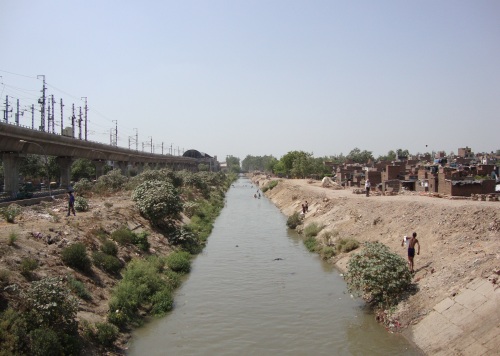
Western Yamuna Canal Delhi
The Western Yamuna Canal Overlooking the Delhi Metro: If you thought the Indian Railways track was the world’s longest public toilet, wait till you visit this.

Cleaning the Yamuna needs a plan that ensures that waste water generated in the city does not reach back into the river untreated. The technology needed to operate these facilities is not very difficult, nor is the O and M costs very high, if there is a committed agency that wants it to happen for 40 percent of the JJ slum dwellers.

Ever considered that the ultimate form of protest of the weak is to do what they are told not to do by people in authority, by doing so they have the satisfaction of being noticed and not ignored by authority. The ultimate weapon of the weak is instead of protesting vocally, they resisting domination and subjugation of every day life, by defecating in the open.

Being tactful and not embarrass the elders and urbanites when you share with them your ideas about living in urban areas, is an important challenge for people like us who are working in the development sector to improve physical urban environment. Among other things about cleaning the environment, it involves defecating in enclosed areas. This idea is to be shared in such a way, that they do not feel that they are seen as adamant, stubborn or morons.

The idea is to be shared in such a way that they are moved by the possibility of a clean environment in such a way that they feel that it is good for them and for others. The idea of living in an urban area as respectable human beings — as valuable members of a community — is always inspiring. This feel good inspires them to take action. These actions are not difficult to take, if the local urban authority wants them to take it, provided they are granted the dignity of being humans in an urban area.

Granting them the grace to be human so that they can grant themselves the grace of being human and not illegal unwanted animals who have wandered in an alien territory from which they can be driven away any time. Feeling good about being accepted as a Delhite, they would grant themselves the ultimate grace of defecating in enclosed areas.

Being tactful for enrolling every one into the idea of being human and taking action of using toilets–the ultimate grace that we grant ourselves while living in cities.

Comments

Global Photography Campaign on Humanizing Development

How do you see development? How can you portrait the human face of the development processes? How do you show that development initiatives and programmes improve the lives of people?

Global Photography Campaign

The Global Photography Campaign on Humanizing Development launched on 1 June 2009 aims to promote and showcase visual examples of people winning the battle against poverty, social exclusion and marginalization by bringing light and life into the above questions.

The Global Photography Campaign aims to show examples of people winning the battle against poverty, social exclusion and marginalization. It is intended to raise awareness of the successes in the development process. The campaign is intended to counterbalance the frequently shown images of desolation and despair. A photo gallery will to be permanently located at IPC-IG office and open for public visitation. A series of photo exhibitions will also be organized in several cities around the world.

Everyone can and is strongly encouraged to participate in this global effort and contribute with a photograph. All photographs should fit into one of the campaign’s fourteen different thematic areas related to the Millennium Development Goals, such as eradicating extreme poverty and hunger, expanding access to food, clean water, sanitation, education and health services for the poor, andpromoting women’s leadership and equal opportunity in education and employment.

Click here to find out more and to submit your photograph!

For further information, please contact:

Communications, Outreach and Advocacy Unit
International Policy Centre for Inclusive Growth (IPC-IG)
Poverty Practice, Bureau for Development Policy, UNDP  
Esplanada dos Ministérios, Bloco O, 7º andar
70052-900 Brasilia-DF, Brazil Phone: (+ 55 61) 2105 5036
E-mail: francisco.filho@undp.org

Comments

Plastic Baba Ki Jai Ho :(

The following image and related text is sent by our good friend and well wisher, Shri Rakesh Khatri of Nature Foundation India. The image was captured in Mayur Vihar Phase 3 but is a common sight in several parts of Delhi.

Plastic Baba Ki Jai Ho

उपरोक्त चित्र सिद्ध प्लास्टिक बाबा की समाधी का हे . अगर आप यहाँ एक थैली बाँध कर मन्नत मांगते है तो यह बाबा आपके घर को प्लास्टिक थैलों  से भरपूर कर देगा.

शर्म नहीं आती हमको.  हम तो कचरा करते ही थे अपने धरम को भी इसमे जोड़ लिया. मन्नत और थैली बांधने का समय दिन या मौका ना खोये. आये और इस शर्मनाक कार्य मैं दिलखोल कर थैली बांधे. आगे आने वाली पीडी को (पर्यावरण प्रेमी  माफ़ करियेगा)प्लास्टिक बैग  प्रेमी बनाये.

आग्रह पूर्वक
सयोंजक
प्लास्टिक बैग फैलाओ  कमेटी
धन्यवाद

Comments (2)

Art for the Sky: The Endangered Sea Turtle

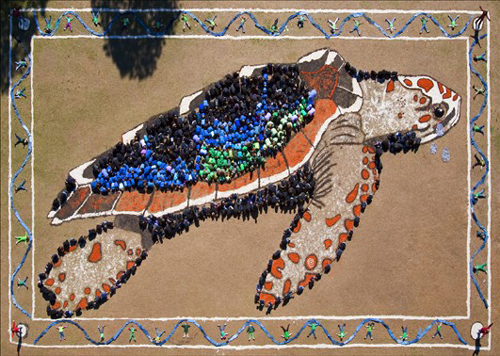
Endangered Sea Turtle Sky Art
The Endangered Sea Turtle is made of 800 children and several colors of Earth.
It is crying tears made of pop bottles.

The above is an amazing Sky Art by Daniel Dancer a conceptual aerial artist and our good friend from Oregon, US.  Daniel runs the Arts For The Sky Project making giant living paintings out of people! The objective: Adventures in Team-Building and Perception to Deepen Our Relationship to Sky, Earth & One Another!

Daniel plans to visit India this winter – a country he loves for reasons more than one and do some awesome 350 Sky Art for the Planet! We wish him all the best.

Comments

Development Alternatives: Training on Green Buildings

Development Alternatives

Development Alternatives, a non-profit organisation established in 1983 creating large scale sustainable livelihoods is organising a Capacity Building Series (2008- 09) for Green Buildings: Designing a Sustainable Future

Globally, around 40 % of virgin materials and energy and 16 % of the annually available fresh water are consumed by the construction sector. The construction and operation of buildings together trigger a number of environmental problems such as indiscriminate mining and quarrying, deforestation and non-renewable fuel based electricity consumption. Urbanization and economic growth in Asia will only intensify in the foreseeable future, thus placing an even greater demand on finite natural resources and energy.

Many Asian countries have begun to put in place strategies and mechanisms for ‘Green’ buildings. ‘Green’ is now a global buzzword and ‘green buildings’ are rapidly expanding their worldwide footprint. Green or ‘sustainable’ buildings, as they alternatively refer to reduced energy consumption. They make the best use of free renewable sources, such as sun, wind, rainfall and bio-waste and utilize recyclable materials. Green Buildings, while being energy efficient, must address regional and contextual imperatives.

There is an urgent need for knowledge dissemination to demystify various facets of green buildings and to highlight potential benefits over their life cycle. Building professionals must have a practical understanding of critical decision making criteria for design and development of green buildings.

OBJECTIVES OF THE TRAINING

  • To provide an overview of design and construction facets of green buildings
  • To establish decision-making criteria for the design and construction of green buildings
  • To provide exposure to various alternative building materials and technologies which can be used to construct green buildings

The training programme will enable the participants to appreciate the various issues in design and construction of green buildings and will equip them with a design methodology which can then be taken up in their respective contexts along with professional expertise.

PEDAGOGY: The following techniques would be used to conduct the training program.

  • Lectures/interactive sessions

  • Site visit to green buildings and guided tour

  • Case study /Green Building explorations

  • Experience sharing with green building experts

  • Training Support materials/ Handouts

Dates:  30 June to 2 July ’09
Venue: Institute of Social Science, 8 Nelson Mandela Road, New Delhi

COURSE ELIGIBILITY
This programme is designed for architects, building engineers; professionals form the construction industry- builders and developers, government housing department professionals. The programme is also suitable for final year architectural students.

YOUR TAKEAWAYS:

  • Knowledge and experience from the training

  • Field Exposure and further learning

  • Manuals and training material

  • Networking opportunity for you

  • And an …………Enriched you

FEE: INR 8,500 per participant


The Training fee covers the following:

  • Food during the training hours

  • Course material

  • Field visits

Click here to Download the Registration Form


Last Date for applying: June 24th, 2009


For more information and to register, contact:


Bhavana Gadre
Telephone: 011-26132718
tla@devalt.org


Manager-Training
TARA Livelihood Academy
Development Alternatives,
111/9-Z, Kishangarh, Vasant Kunj,
New Delhi-110070

Comments (1)

Diverseeds: Genetic Resources for Food & Agriculture

diverseeds

DIVERSEEDS – a European scientific project of the IDC and supported by the European Commission’s 6th framework programme on ”Networking on conservation and use of plant genetic resources in Europe and Asia” has just released the diverseeds documentary film!

The 50 mins documentary film shows the importance of agricultural biodiversity for food and agriculture, with astonishing pictures from Europe and South East Asia/ China.

DiverSeeds South East Asia China

In agriculture, the widespread adoption of a few improved varieties has narrowed the genetic base of important food crops and led to the disappearance of hundreds of landraces. Conserving and using plant genetic diversity is vital in meeting the world’s future development needs in Europe, Asia and elsewhere. This documentary shows why biodiversity is important for agriculture and how it is conserved and used in many different locations in Europe and in South East Asia/ China.

The production of the film was part of the activities carried out in the 2-year EC funded project DIVERSEEDS. The film can be used to explain the importance of plant genetic resources to farmers, students, high school students, government officials, funding agencies or the general public.

Click here to watch parts of the film online and to purchase. You can also order your copy of the film DVD by writing to dvd@diverseeds.eu

Comments

3rd Renewable Energy India Expo 2009

3rd Renewable Energy Expo India 2009

The 3rd Renewable Energy India 2009 Expo–South Asia’s largest event on Clean ‘n’ Green Energy will be held at Pragati Maidan, New Delhi from 10-12th August 2009. The Expo will provide an invaluable opportunity for delegates to witness the latest technological trends and developments in the global renewable energy industry.

10-12 August 2009 at Pragati Maidan, New Delhi

The event is an international platform, featuring over 300 exhibitors, 160 conference speakers, 2,500 delegates and 15,000 trade visitors from 30 countries. The 3-day international conference brings global entrepreneurship and innovation to the fore, and discusses emerging opportunities in the Indian renewable industry.

The Expo has demonstrated immense growth since the last edition, and has expanded its format to include Energy Efficiency, Cogeneration, Geothermal energy besides Solar, Wind, Hydro and Bio energy (Bio mass and Bio fuels) sectors.

Click here for participation charges and detailed conference programme

Comments

Cleaning the Yamuna

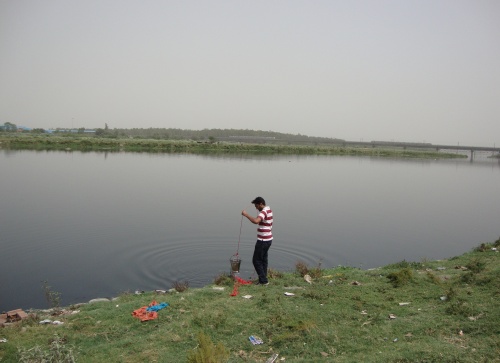
Yamuna sampling at the IP Barrage

Yamuna River passing through the city of Delhi is polluted and every one is concerned. There is money spent on it. 1200 cr. worth of efforts were spent on Yamuna Action Plan Phase I and Yamuna Action Plan Phase II on creating the STP and physical infrastructure in treating the waste water that gets generated per day in the city. Setting up of Sewage Treatment plants along 42 towns and cities in the up steam of the river was part of the YAP I, while the Phase II is mainly focused on Delhi Metropolitan Region with Delhi Jal Board managing the project.

Serious deficiencies and back log in sanitation and waste water services have resulted in the dwindling of water flow and is 80% of the source of ‘non point pollution’ in the river. The usual rhetoric is to blame the victims: Of the total population of 13.9 million about 6 million or 45% lives in Jhuggi Jhompadi slums. They do not have piped water supply all the time and depend on hand-pumps and ground water for other uses and open defecation is a norm with them. They are not connected with drainage and so the waste water is not collected and treated before it goes back to Yamuna and hence this is the status.

What is missing in the rhetoric is empathy and compassion for the people who are struggling for survival, earning a livelihood and sending the surplus to villages they come from. Being tactful and not embarrass them, when you share with them your ideas about living in urban areas, among other things it involves defecating in enclosed areas.

What is possible is creating Ownership of the city in the minds of people who live in the JJ Slums. I want to share with you two initiative. Prakash lives in Ashok Nagar and is proud to be a resident of Delhi. He decided to take action in his lane. He had a meeting of 20 houses and they agreed to contribute to clean the open drain on a monthly basis and raise level of road in front of their houses. Second is by Ramesh who lives in a JJ Colony near Trilok Puri. He decided to plant trees in the plot reserved for public garden next to the local temple. He enrolled the Pujari to support him in this action.

This is a slow beginning and will take a long time to clean up the Yamuna. Many more need to take ownership of the city and clean it up and will need encouragement and support. But the fact is small localized initiatives coming together, is the only way Yamuna can be cleaned and remain clean, after all the pollution also took over 30 year to reach this level.

Comments

Click for New Delhi, India Forecast