Archive for December, 2009

Conversations

A sudden and unexpected death of a person close to us leaves us paralyzed. What next is a familiar question in such an event. We suddenly realize there is a lot that needs to be done which we had left to complete with that person for ‘someday… but not now.. (because)…’and we are suddenly left with the realization that it is too late.

We get into any of these spaces. ‘I am helpless without you.’ ‘Oh! The things I could have done with you and your support.’ ‘I am sinking and life is not worth continuing.’ Or we can get into ‘A great person to have known and been with and left me enriched but time to move on.’ “ I learned a lot and my life is not the same but now I have new goals and aspirations.’ Whatever space we find ourselves in is just the way we are meant to be.

What we become present to is the person we have lost is not really lost to us. He /she is the person who while did have a physical existence outside of us is really the person that we created. Whatever that person is to us is a result of our creation. Who s/he is or who s/he is not, is all in our mind and we actually relate to this person of our own creation. So any person that we have come in contact with in our lives is really an image that we created of that person irrespective of who s/he really is, and who he really is not.

That can never be lost. It is our creation and therefore will be with us as long as we choose to let that person be with us.  One of the implications is that all the conversations we have are conversation with ourselves. Therefore, the physical existence of a person for our conversations is not necessary. If we can imagine the person, we can continue to have conversations with that person and we can continue to refer to that person as long as we live.

The same thing applies to the idea of climate change. As long as we can imagine the impacts of climate change, we can create images/ data/ proof of its impacts and take the necessary actions that are needed to make it disappear and feel good about it…

Comments

Hindustan Times – Brightest Young Climate Leaders (BYCL) 2010

BYCLCOME WITH YOUR PLAN AND IMPLEMENT THE CHANGE

Hindustan Times – Brightest Young Climate Leaders (BYCL) 2010 is an exclusive national platform to select, felicitate and recognize the TOP 50 brightest young minds in India who have been involved with climate change ideas, initiatives or activities. The Brightest young climate leaders may be from the private or public sector, entrepreneurs, youth or student leaders who have shown exemplary work in the field of climate change mitigation. They will be chosen from a nationwide application and nomination process in association with Hindustan Times and will be recognised at the national BYCL summit in February 2010.The summit will also bring together exceptional set of judges and mentors who are making a difference in the field of climate change through business, community work, thought leadership, Government and policy activity or simply by leading a seriously green life!

Eligibility: Below 35 yrs

Participation guidelines:

GROUP A (Creator), B (Implementer) and C (Attendee)

Deadline: December 31, 2009 till 5 p.m IST. Deadline Extended till January 15, 2010

Format of the Conference:

  • Applicants must apply with a specific climate change initiative or idea (Group A) or they must apply to implement a climate change initiative or idea with a strong background in project implementation (Group B)
  • Anyone can also nominate an applicant in the same categories i.e. Group A or Group B. If you are nominating someone you would need to complete the application process on the applicant’s behalf
  • At the summit the winners will be going through interactive sessions to further develop their climate change initiatives, ideas and business plans and an opportunity to pitch to the BYCL Plenary of mentors and judges

The top 3 ideas/teams will be incubated by BYCL platform.

GRAND PRIZE:

Top 50 applicants will be chosen and invited to Delhi to be awarded as the “Hindustan Times – BYCL 2010″ in a summit in February, 2010. Selected entries will be published in Hindustan Times “SAVE OUR PLANET”

NOTE: If you are NOT an Applicant or nominating an applicant you can come as an Attendee. This event will be opened to selected professionals and students who want to attend and participate in this unique event of leadership in climate change.

For more info log on to http://www.bycl.sacredfig.com/

Comments (1)

Swimming With the Current

This Conference Of Parties, COP 15 is not COP 15th.. It is not one among the series of 1st to 16th that comes before 16th and after 14th. It is ‘COP 15’ – a stand alone event and it is the best ever so far, most successful meeting right now. After weeks of hectic negotiations at COP15, five countries including India, China and the US arrived at a proposal. Not, as the media highlighted to be, something that was salvaged by the President of USA’s intervention for hammering out an agreement among the BASIC group, but the best outcome we got out of the four major polluters contributors to come up with a consensus. “BASIC” is something to celebrate and take actions toward the future and towards controlling climate change. This ensures that the five major polluting countries including the USA have take responsibility for the changing climate and have made a commitment to the future of less than 2 degrees of temperature rise and saving the earth from the deleterious impacts of climate change. This is an empowering context to operate from.

There is resignation and cynicism, because the countries involved and the groups they can form seem to be infinite. It seems like a struggle, between various groups of countries and among various countries, based on their size, their location, their level of development, and their claim to responsibility towards global warming. There is a group formed by countries that are low-lying small island nations. Then there are the developing countries (G77) and thenthe developed countries (G7), and then still another group plus India and China (G7+2). Permutation and combination for 187 countries has infinite possibilities.

The resignation and cynicism has set in thanks to the media, because we are swimming against the current, we were hoping to see actions, in order to reach a goal, so that we could have consensus on the issue and feel good about it. We wanted to feel good about doing something, and thought that actions should come first, so the goal of controlling climate change can be achieved. It is a struggle and as we are swimming against the current, hence resignation and cynicism is more likely to set in. What we normally do is that we set up a target and we act and we struggle to achieve it and that leads to us feeling upset, and angry about not getting what we want. Then we give up.

The natural flow/ direction of the current for us human beings is exactly the opposite. We are human beings and we are the only creatures who have language and the ability to conceptualize and create a ‘world’ using the words. We are the only creatures who can create a possibility for a future that inspires us using words, then we can plan actions towards achieving it, and then feel good about the completion of such projects. We create dreams using words, then we do and then we have the satisfaction and fulfillment on meeting the dreams we created. Hence the BASIC and USA consensus is perhaps the right direction.

Comments (2)

Making a Future for All of Us

Solar India

Now we are really thinking and looking for actions in the area of climate change as is obvious though your feedback comments. Using home cooked food, not buying water, reducing plastic usage, exploring possibility of where else can we plant trees besides government lands. Truly practical and do-able concrete solutions come to mind for some of us reading the blog. I truly appreciate you putting your mind and thought to it. Thank you for the simple steps that you guys succinctly suggested.

Using popular media coverage including print media, as a thermometer to gauge the feelings of the people on this earth it is obvious that the majority of civilians are not convinced about climate change and its dooms day prophesies or the urgency of the situation. Articles quoting even our own political leaders indicate the skepticism of scientific proof of climate change. At the Al Gore interview on ‘Tonight Show’ a month back, the tone and feeling of Jay Leno–the talk show host–indicated skepticism about even the ‘cause’ for which he won the Nobel Prize. Even the legitimacy of the UNFCCC and its claim to represent the concern for future of earth is questioned by some, claiming that it is a non-elected body and therefore not representative of the public opinion. Who knows what next?

With increasing possibility of climate change talks failing to come up with a consensus, where do we go from here? We cannot undo what has happened. First step is to accept that expecting governments to take actions is not going to happen soon. We can both bemoan all that has happened and be resigned and cynical about our future, or we can create a future that works for us.

To create a future that works for us we can start with small steps. We can continue to be committed to keeping alive the issues and debates on climate change, through concrete actions at individual levels, however small. It is for us–the citizens of the earth–to push the governments to take actions. As long as the divisive forces in the governments that can create  a ‘we versus they’ divide among nations, there would be no consensus on issues that do matter substantially. What is missing is connectedness and relationship with people across the globe as One.

A possible small step would be to get in touch and keep in touch with the India migrants abroad over past several generations across the globe. Enroll them into the future that is favorable to the Earth. You will be surprised to find how far and wide we have migrated over centuries. With one small step at a time, we as humans are perfectly capable of setting long term goals and time tables towards which we can take guided actions to ultimately reach there..

Comments (3)

Making a Climate of a Difference

unfccc copenhagen

The profound privilege of continuing with the blog is because of each of you who visits the site and reads it regularly. I truly appreciate you all for that and especially those who take the time out to comment on it. Similarly, climate change related negotiations exist because majority of us believe that continued greenhouse gases emission is not good. ‘This should not happen’ and so we must take action to contribute in any way we can, even if it means to read a blog or responding to one–all in the attempt to generating awareness on the topic.

This fortnight–7 December to 18 December 2009–is dedicated to negotiations on climate change and is an outcome of this collective belief. The Conference of Parties (COP), with 192 member countries, formed in 1992, is attending this conference. This is the 15th meeting and is taking place in Copenhagen, Denmark. The United Nations Framework Convention on Climate Change (UNFCCC) created the Kyoto protocol on 11 Dec 1997. It is a systematic plan for voluntary reduction in carbon emissions by each of the nations, and now expires in 2012.

While a majority of us believe ‘this should not be’, there is no consensus on the actions that need to be taken. There is mistrust and self doubt among the members about the way out.

For economists, carbon has emerged as a trading commodity with experts complaining that the current price of $13 a tonne is too low for encouraging clean technologies such as wind and solar. Among development professionals, discussion are on for technology transfer from the rich to poor countries. 1% of GNP transfer to the developing countries amounts to $400 billion annually, by 2020, is often quoted as reasonable. Briton suggested $100 billion and the EU suggested Euro 100 billion as transfer funds for the same.

Righteous argument of the poor countries towards the rich holds little water with China holding second place with 45,301 million tones of carbon emission between 1997 and 2007 and India being 5th with 11,870 tonne.

Among political scientists,  the debate is still on whether climate change a real issue and a concern for the future or just another way to promote European superiority over the US by promoting financial transfers through WB and IMF. Obviously politics and climate change make uneasy bedfellows…

And even when we have evidences like late bloom in Kerala or swallows and snow disappearing in Siliguri or sea moving inland in Valsad Gujarat or grizzlies mating polar bears in the Arctic Circles, etc. it is still being debated as to whether these are conclusive signs of climate change.

Whatever be the case, one thing is clear, we are all committed to making a difference in combating climate change. The possibility of being able to control our actions to alter the future and to control nature still excites us. We are continuing to take action in the best way we can. We do not compromise on improving our quality of life and we constantly setup goals for Human Development through HDI. That is what makes us all unique…

Comments (5)

Toxics Link Public Lecture on GM Food: Is India Ready?

Toxics LinkToxics Link’s Environment & Health Public Lecture Series

GM Food : Is India Ready?

Film screening followed by panel discussion

The genetically modified food controversy is a dispute over the relative advantages and disadvantages of genetically modified (GM) food crops and other uses of genetically-modified organisms in food production. The dispute involves biotechnology companies, governmental regulators, non-governmental organizations and scientists. Right to choose safe food is a fundamental right of consumers in a democracy. However, the onslaught of GM crops has been robbing the people of their right to choose. In fact according to some experts the production and promotion of Genetically Modified foods as an act of Bio-terrorism.

Safety is a major issue in this controversy. Adverse health effects coupled with effects of pest and herbicide-resistant crops on ecosystems and their impacts on biodiversity are controversies that mark the entire GM food debate today. The risk and effects of horizontal gene transfer have also been cited as concerns, with the possibility that genes might spread from modified crops to wild relatives.

India is at crossroads. But are we ready?

Screening: Poison on the Platter, Directed by Ajay Kabchan, Presented by Mahesh Bhatt, Duration: 30 mins

Panelist:

  • Mr. Rajesh Krishnan of Greenpeace India
  • Dr. P. Ramasundaram, Principal Scientist, National Centre for Agricultural Economics and Policy Research
  • One more speaker is yet to confirm

Date: 11th Dec 2009, Friday
Time:
6:30 p.m.
Venue: Conference Room 1, India International Centre, Lodhi Road, New Delhi (In collaboration with India International Centre)

For further information, please contact:

Suparna Dutta: suparna@toxicslink.org
Nitin Jain: nitin@toxicslink.org
Email: info@toxicslink.org

Also Read:

Mr. Rajesh Krishnan of Green Peace India

Dr P Ramasundaram, Principal Scientist, National Centre for Agricultural Economics and Policy Research
One more speaker is expected to join us

Comments (1)

Announcing: North East Environmental Youth Movement

North East Environmental Youth MovementEnvironmental degradation; habitat destruction; pollution; water scarcity; biodiversity loss; depleting forest cover; dam construction and its social implications; social unrest – are few of the issues demanding immediate attention in the North Eastern (seven sisters +1) states of India. Now, with the threat of climate change looming large, the only option is to come together for sustainable development of the region, before time runs out and moshttp://delhigreens.com/wp-admin/post.php?action=edit&post=2283t, if not, all is lost.

The degradation of North East India’s environment and ad hoc “developmental” activities taking place in the region will impact the future generations much more severely than it is impacting the present generation. The future of the youth in the North East is at stake and only a path of Sustainable Development can save the region from imminent destruction. But taking this path is a decision that needs to be made. And clearly, the policy makers in the eight North Eastern states (and at the Center) have not been able to take this call so far.

With this backdrop, the North East Environmental Youth Movement (NEEYM) is being setup in the National Capital Region of Delhi to bring together and raise awareness among the youth from North East India and set up a nation wide movement with a similar objective.

Supported by Delhi Greens, NEEYM is participating in the Global Day of (Climate) Action on the 12th of December, 2009 and would be organising events across Imphal, the capital city of Manipur. As part of the Global Day of Action, NEEYM has called for a CITIZEN’s UNITE inviting people from all walks of life to come together in the streets of Imphal. The Plan of Action so far is to make a big mural on environment theme at the front of Nupi Lal Statue and a rally by rickshaw pullers holding a long stretch banner from Thangal Bazar to Bapupara.

Join NEEYM in safeguarding the future of India’s North East…Click here to Sign up for the NEEYM Ning!

For further information and to participate, volunteer – please contact:

Akoijam Surjit Singh (New Delhi-09871546654/ Manipur-9774575952)
Email: surjit@neeym.org

Impuri Shimray
9891477390
Email: impuri@neeym.org

Comments (2)

Invite: Perspectives Public Meeting on India’s Rivers

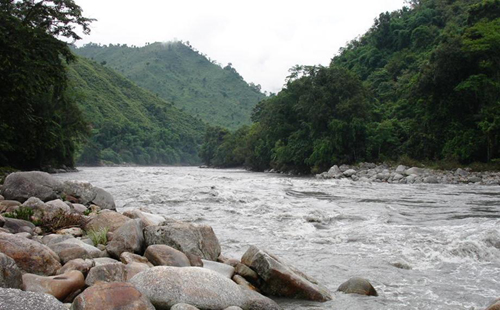
River Kameng in Arunachal Pradesh

River Kameng in Arunachal Pradesh – a dam in the pipeline…
as is the case for rivers across the Himalayas

Perspectives is a non-funded group of students and teachers working to create a space for debate and discussion in the University on issues of social, economic and political relevance. Perspectives Invites you to a Public Meeting on “Down the Drain: Looking for Justice along India’s Rivers”.

Led by: Amita Baviskar, Associate Professor, Institute of Economic Growth and Editor of “Waterlines: The Penguin Book of River Writings”

Date: Monday, 7th December 2009
Time: 2:30 p.m.
Venue: Students’ Activity Centre (above the Holistic Canteen), Faculty of Arts, University of Delhi

For further information and to participate, please contact:

Mobile: 97171-14182
Email: contact.perspectives@gmail.com

Comments

Training on Value Creation Through Renewable Energy Models

Development Alternatives

TARA Livelihood Academy of Development Alternatives, a non-profit organisation established in 1983 creating large scale sustainable livelihoods is organising a training onValue Creation Through Renewable Energy Models.

Introduction:

With a strong industrial base and successful commercialization of technologies in wind, spv, solar thermal, small hydel, biogas and improved biomass stoves, India is in a position today to offer state of the art technology to other developing countries and play a leading role in the global movement towards sustainable energy development. India has well equipped institutions which organize training courses and provide technical assistance to managers and technicians of other developing countries who can then fabricate and install RE plants.

Training for trainers is also undertaken so that they can formulate projects, implement and manage them. India, as one of the pioneers in the area of Renewable Energy Technologies, has the competitive edge in terms of prices when compared to other international players providing renewable energy equipments and services. Today’s technological advancements have developed more efficient means of harnessing and using renewable energy sources, and these sources are gaining increasing popularity. They offer us alternatives to non-renewable energy sources, such as nuclear, oil, coal, and natural gas which can cause acid rain and may contribute to the overall warming of Earth’s atmosphere known as the greenhouse effect.

The more we use renewable energy, the more we benefit the environment, strengthen our energy security, create jobs locally, and help improve our economy.

OBJECTIVES OF THE TRAINING:

  • To make participants aware and understand Value Creation through Renewable Energy
  • To make participants understand the concept of energy based businesses and its applications.
  • To acquaint them with tools, techniques and information that would be required to conceptualise, develop and implement such innovative programmes in the area of Renewable energy and natural resource management
  • To share DA’s experiences in energy generation and its application for various purposes.

PEDAGOGY: The following techniques would be used to conduct the training program.

  • Lectures/interactive sessions
  • Group Discussions
  • Case studies/Group exercises
  • Brainstorming sessions/ Experience sharing
  • Training Support materials/ Handouts
  • Power-point Presentations

Dates: 18 to 20 December, 2009
Venue: TARAgram, Appropriate Technology Centre, Orchha, Madhya Pradesh

COURSE ELIGIBILITY

This programme is designed for Officers from Central & State governments, National/International Development Organizations, Corporate as well as CSR Professionals, Academic institutions, Business owners/entrepreneur and individuals who possess an interest in Renewable Energy Sources.

FEE: INR 9,500 per participant | INR 12,000/- (240 USD) for Overseas Participants

Last Date for applying: December 15th, 2009

For more information and to register, contact:

Bhavana Gadre
Telephone: 011-26132718
tla@devalt.org

Manager-Training
TARA Livelihood Academy
Development Alternatives,
111/9-Z, Kishangarh, Vasant Kunj,
New Delhi-110070

Comments

Call for Proposals: The CITY as STUDIO Sarai-CSDS Fellowship

City as studio

The Sarai Programme at the Center for Study of Developing Societies, Delhi is an interdisciplinary platform for the investigation and interpretation of contemporary urban experience. Sarai produces events and processes, publishes offline and online content and generates contexts for research and creative practice concerning contemporary urban conditions.

The Sarai Media Lab invites expressions of interest and intent from artists and practitioners in diverse media – textual, visual, aural, spatial and temporal – who could be – visual artists (photographers, sculptors, installation artists, graphic artists), writers and independent scholars, filmmakers, architects, experimental musicians and composers, sound recordists, performers and people whose practices straddle or transcend different areas of practice  - for participation in the ‘City as Studio’ Project.

The City as Studio initiative will create contexts for high intensity inter-disciplinary processes at different locations in Delhi and at the Sarai space at CSDS. Sometimes these process(es) may be rendered as an exhibition, at other times as a gathering, as a library, as a temporary archive or as an occasion for performances, conversations and debates. At still other times it may take the form of a workshop, a temporary atelier, a media studio, a publication or an online
platform.

The City as Studio is neither a one off event, nor a workshop or a residency, nor a festival or a simple cluster of public programmes – though it has elements of all of the above. It is primarily a method of generating a new public profile for creative work in the city, a scanning of the horizon of possibilities that can be opened up in urban spaces through the presence of art, experimental cultural activity and public exchanges.

The studio process plans to bring together artists, filmmakers, photographers, discursive interlocutors, architects, writers, urbanists, scientists, architects, social actors and cultural workers, neighbourhood initiatives and diverse audiences to create art works, participatory performances, media works, and transmissions of
different kinds of signals.

Possible areas of that will be reflected upon could include but need not be limited to:

  • the city as spectacle, as a site of consumption, as an arena of power
  • the growing intensity of surveillance,
  • the question of distance and anchorage: housing and transportation
  • access to resources, location and privilege
  • the local pursuits of pleasure
  • life, death, and rites of passage in the city
  • the everydayness and banality of terror
  • imagined histories and urban legends, the fantastical and uncanny city
  • the archived and remembered city
  • urban ecologies, the city as a zone of bio-diversity, urban forests, rivers
  • ways of life, sub-cultures, bodies of informal knowledge, local practices
  • migrants, margins and minorities

Sarai invites applicants to imagine that the city itself is their studio, and that urban realities are their materials in order to create artistic work that acts as a body of public knowledge in and about the city.

Read the rest of this entry »

Comments

Click for New Delhi, India Forecast