

Dense, Fast and Native, Analyzing the Miyawaki Plantation Method
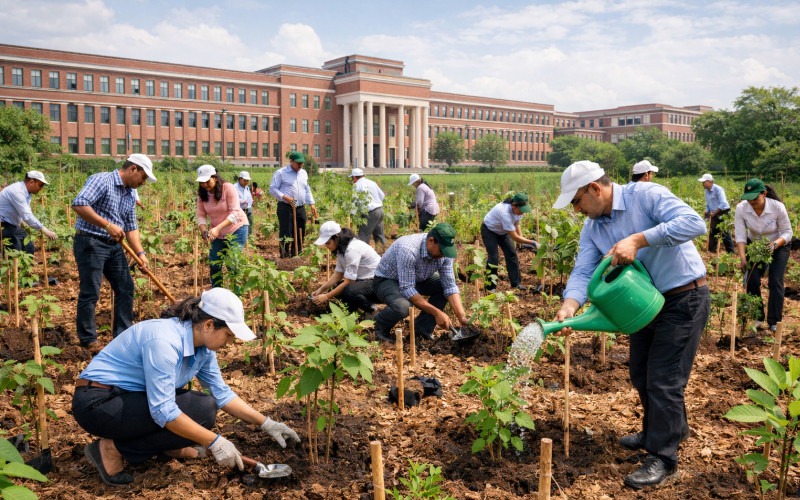
Delhi is one of top ten most polluted cities in the world. High AQI values have kept the people and Government of Delhi on toes. Air pollution comes with health impacts and also impacts the reputation and tourism of Delhi. This calls for preventive green measures for mitigating these impacts. One such method is the Miyawaki plantation method, also known as pot plantation or potted seedling method. It is an afforestation technique which uses native species to create multi-layered self-sustaining dense forests in a short span of time.
Miyawaki Method
The Miyawaki method was developed by Akira Miyawaki, a Japanese botanist, in the 1970s. Its primary goal is to increase green cover on a given plot of land for multiple benefits. In this technique, two to four native species are planted in every square meter. This is said to ensure ten times faster plant growth with dense vegetation. A strip of Miyawaki forest created in this way can act as a natural barrier against dust as well as noise after the first two years of plantation.
Following are the steps to develop a Miyawaki forest:
- Survey local area to identify 40-50 native species suited to the area’s natural vegetation
- Test the soil to decide on covering material and nutrients needed
- Grow seedlings using locally procured seeds in controlled conditions
- Mix soil with local plant waste like leaves, husks and cow dung for nutrients
- Plant them densely, 3-5 plants per square meter, making random pattern
- Cover ground thickly with plant waste to mimic natural forest floor
- Water them daily for the first 2-3 months, then less; forest will manage itself after 2 years
Miyawaki in India
The Miyawaki method is gradually gaining popularity in India. It is one of the most discussed technique in afforestation in India. The Miyawaki method was first introduced by Toyota Kirloskar Motor (TKM) as a pilot project in its plant at Bidadi, Karnataka in 2009. The objective was to create a greenbelt around the plant to prevent the nuisance of pollution and noise. It gradually gained popularity through urban green policies and smart city programmes. The Telangana Government embraced the Miyawaki method of afforestation under the Telangana Ku Haritha Haram in 2018 to increase green cover in the state.
Similarly Mumbai’s BMC has planted more than 64 Miyawaki forests at multiple sites like Chembur, Colaba, Malad with native species like Amala, Bel, Arjun, Gunj, Peepal, and Karanj. Even the Mahakumbh 2025 saw the plantations of several Miyawaki oxygen banks at strategic locations over the course of two year. Fruit trees like mango, amla, tamarind, lemon, ber, and drumstick (sahjan); medicinal plants like neem, arjuna, tulsi, brahmi, and mahua; and colourful landscaping plants like Hibiscus, gulmohar, jungle jalebi, kachnar, and mahogany were used to increase greenery and reduce local pollution.
Challenges in Using Miyawaki Method
Although the Miyawaki method is known for its benefits, there are several challenges in using this method as well. At the outset, Miyawaki method does not provide a universal solution to the issues of deforestation and resource depletion. Despite its low maintenance cost, it has very high initial costs as we have to invest in good quality seeds, soil improvement and related infrastructure. Plenty of workers are needed in the early stages of Miyawaki forest development, and it can be challenging to find qualified, skilled workers. Considerable research inputs also need to go in since it is important to know which species is suitable for which terrain, soil and climate.
Further, forest created using the Miyawaki method does not always give a natural habitat feel since life forms other than trees like shrub, climbers and orchids are not always a short or long-term feature of a Miyawaki forest. In some case examples, areas like wetlands and marshes are being used for developing Miyawaki forest which is not correct. These ecosystems are unique to themselves and we need to keep them as it is to continue to derive ecosystem services benefits from them. The rapid greening opportunity that Miyawaki forests provide encourage some to transform barren looking lands with rocky habitat into forests. However, it should be kept in mind that these rocky habitat are home to many organisms and should not be unnaturally disturbed.
Way forward with Miyawaki
The growing concerns of pollution and declining green cover in urban India demands for a Miyawaki method like disruptive technique. However, the forests so created can impact the surrounding ecosystems or disturb the natural equilibrium. Only small urban plots, urban wastelands, schoolyards, roadside strips, or greenbelts around institutions should be adopted for developing forests using Miyawaki method. Local ecosystems will certainly get disrupted by Miyawaki forest, but the pollution issue in metropolitan India demands such disruptive green strategies. Let this be both a call to act now and a reminder of our larger responsibility: to reduce pollution at its source, so preservation, not remediation, becomes our legacy.
With inputs form Delhi Greens Editorial Team.