

Air Pollution Control Measures Across Delhi NCR in January 2026
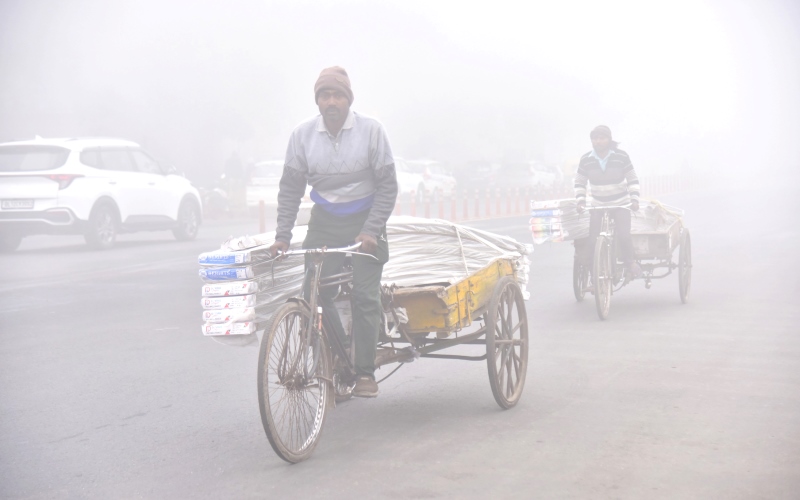
The National Capital Territory (NCT) of Delhi and the broader National Capital Region (NCR) are facing seasonal spikes in air pollution every winter. The Government of India’s Ministry of Environment, Forest and Climate Change (MoEFCC) has been working through the Commission for Air Quality Management (CAQM) and with the Central Pollution Control Board (CPCB), states and local authorities to curb rising air pollution.
The Government has stepped up enforcement, monitoring and action planning in January 2026. Following is a summary of the composite efforts, which blend on-ground inspections, graded response actions, enforcement task force reviews and targeted pollution abatement initiatives.
1. Massive Enforcement and Inspection Drives
In early January, CAQM conducted a large-scale enforcement inspection in Nuh district (Haryana) as part of Operation Clean Air, a targeted on-ground surveillance and compliance drive across the NCR. Ten flying squad teams inspected 105 industrial and construction sites, including stone crushers, ready mix concrete plants and other industrial facilities that are critical pollution sources. Most units were found non-operational or complying with GRAP Stage-III mandates, with a few violations (such as diesel generator usage) identified and documented for action.
The different agencies of the Government have also been undertaking evening and night inspection drives in North Delhi, during which multiple instances of municipal solid waste burning, biomass fires and localized waste dumping (key contributors to air pollution) were identified and acted upon. These efforts reflect regular and persistent inspection operations meant to deter non-compliance, especially during winter when seasonal smog and stagnant meteorological conditions trap pollutants close to the ground.
2. Enforcement Task Force Reviews Inspection Outcomes
On 21 January 2026, the 124th meeting of the CAQM Enforcement Task Force reviewed inspection activities conducted between 7 and 19 January. During this period, 330 inspections were carried out across key pollution sectors, including:
-
241 industrial units,
-
22 diesel generator (DG) sets,
-
5 construction & demolition (C&D) sites,
-
road dust management and compliance,
-
biomass burning and municipal solid waste accumulation or burning.
The ETF’s ongoing reviews help ensure that enforcement actions remain coordinated, timely and grounded in on-ground data, enabling adaptive responses to dynamic pollution conditions.
3. Graded Response Action Plan in Force During Winter Peaks
The CAQM invokes stages of the Graded Response Action Plan (GRAP) when air quality in Delhi-NCR deteriorates into “Very Poor” or “Severe” categories. In January 2026:
-
The sub-committee invoked Stage-III & upward of GRAP due to rising AQI levels in Delhi (above 350); this included intensified actions such as restrictions on certain diesel and petrol vehicles, curbs on non-essential construction, additional dust suppression and enhanced monitoring.
-
Upon marginal improvement in air quality and favorable meteorological forecasts, the sub-committee revoked these elevated Stages actions while retaining lower stages to sustain air quality control without abrupt impacts on economic activity.
The dynamic invocation and withdrawal of GRAP stages, driven by real-time AQI data from the CPCB and weather predictions from the India Meteorological Department (IMD) and the Indian Institute of Tropical Meteorology (IITM), demonstrated an adaptive policy approach to short-term pollution fluctuations.
4. Leadership Engagement and Inter-Government Coordination
Beyond enforcement data, senior leadership engagement has been a notable theme in January:
-
The Environment Minister reviewed Delhi’s Air Pollution Action Plan with the Chief Minister of Delhi, stressing a long-term coordinated approach and underscoring the need for strict measures on vehicular, industrial and dust pollution as well as robust public participation. Notices were also been issued to industries failing to install emission monitoring systems, with closure actions initiated for non-compliance.
-
Parallel high-level reviews of action plans for NCR cities including Rohtak, Panipat, Manesar and Karnal reaffirmed that air pollution control in the NCR must integrate strategies across multiple adjacent cities, reinforcing that air quality is an inter-state challenge requiring harmonized planning across Punjab, Haryana, Uttar Pradesh, Rajasthan and Delhi.
-
Media reports indicate that union leadership directed local authorities to ensure visible improvements in air quality within a short time, including clearing dust and construction debris from roads, curbing biomass burning, and enforcing bans on high-impact construction activity during poor AQI periods.
5. Public Health and Awareness Linkages
Broader government actions and messaging have emphasized public awareness, health advisories, and communication efforts when pollution levels stay elevated reflecting a holistic approach that combines regulatory enforcement with public engagement.
6. Continued Vigilance and Data-Driven Response
The coordinated enforcement pushes, inspection reviews and GRAP activations in January 2026 highlight several underlying principles of India’s air quality management system:
-
Data-driven triggers for policy response based on real-time air quality and forecasting models,
-
Continuous compliance monitoring via flying squads and task force inspections,
-
Inter-governmental coordination across ministries, state governments and statutory bodies,
-
Targeted actions on key pollution sources such as industries, construction dust, biomass burning and vehicular emissions,
-
And adaptive implementation of GRAP stages to balance public health protection with economic continuity.
The MoEFCC through CAQM and in tandem with CPCB and state agencies pursued multi-pronged air quality management actions in the Delhi-NCR region during January 2026. These initiatives represent an intensification of efforts to tackle entrenched winter air pollution challenges in and around the national capital. While air quality remains a complex and seasonal issue, the strategy reflects a combination of regulatory enforcement, inter-agency cooperation and real-time responsiveness to evolving pollution patterns.
Top image via Photo Division showing fog in Delhi, which is often mixed with air pollution.