Archive for December, 2008

Paper Wastage: What We Can (and Should) Do About It

My exams concluded recently, and the whole process, apart from making me dizzy (!), led me to think about the issue which stares us in our face, yet gets unnoticed so easily: paper wastage.

Paper in the BinAll of us are aware that the ultimate source of paper is the forest. There is a direct correlation between the amount of paper used and the number of trees felled to obtain it. Although everyone talks a lot about “saving trees” and “deforestation”, most of us don’t think twice about wasting paper. Paper is used everywhere – in schools, colleges, homes and offices – and very often, the wastage is much more than the usage. The reason for this is simply a careless and callous attitude: we use the whole sheet of paper just to note down a shopping list; we use a crisp new sheet to print a small paragraph; we print notices on only one side of a sheet and don’t bother to use the other blank side-the list is endless.

To be specific, I’ll take the example of a very well-known MNC (whose mailing portal we all use), where one of my friends interned this summer. She was shocked to see the extent of wastage there- everyday, instructions to interns were given on printed sheets, which were later disposed of in the bin. The company has an active CSR wing and is doing a lot for the society, but in my opinion, by carelessly wasting so much paper, it is clearly abdicating its responsibility towards the environment.

Most unfortunate is the fact that we don’t even recognize the amount of waste we generate unnecessarily. I claim it’s unnecessary because it can be easily reduced. All we need, is to be a little more careful and sensitive – using the blank side of bills to note down shopping items; reusing envelopes by pasting a sticker on the address area; using one-side-used sheets for rough printouts; requesting our bills and bank statements to be e-mailed to us; recycling newspapers and magazines and so on.

Returning to the example given above, the company could mail the directives to its interns, or post a single notice on the office information board to give out common instructions. Essentially, we need to minimize waste by reusing and recycling (when reuse is not possible). I truly believe that these small steps can go a long way in conserving paper and saving our precious forests.

And to conclude on a lighter note, perhaps we could also ban exams, to reduce the wastage of paper!

Also Read:

Comments

Recession and Environment: Why Bother?

Recession - From Green to RedBetween April ‘07 and December ‘08, some big names like CitiBank, HSBC, Morgan Stanley, BNP had their over billion dollar portfolios degrade rapidly. There is a real and present danger of recession in the global economy. As a response to this crisis, over the last few months have seen large global financial institutions and banks being bailed out by their respective governments in their countries in America and Europe, as well as other emerging markets economies. Stock markets collapsed in October ‘08 in India too and now in December they are fluctuating but within margins.

There were three immediate Global impacts, that were experienced even by us in Delhi. There was food crisis in Asia, in January ‘08, inflation was up giving rise to increased food grain prices in the local markets. The daily consumer commodities prices rose by 20 percentage points. Prices in capital asset prices were also increasing. But due to timely actions by respective governments that influenced the agricultural decision for food grains by farmers, such as increased support prices for food grains – brought the food crisis under control in India, and commodity prices are now stabilising.

While prices are high, they are not rising. By August, food inflation pressure has reduced, now policies are focusing on asset price decline. Oil prices have reduced substantially form $140 a barrel to less than $100 a barrel. Over next one year, hopefully, commodities, oil, and food will stabilize, due to falling prices.

Given this global financial crisis should our community of ‘Delhi Greens’ be bothered and why? In what way do changes in economy affect our physical environment of Delhi as a metro city? These are some of the obvious questions that would come to us.

Impacts experienced in Delhi are that of job losses, wage cuts, no new jobs being created, fall in consumptions of food, consumer commodities, and consumer durables. What would be the possible environmental impacts of this on our city of Delhi, is something each of us needs to think about and be concerned.

Some obvious impacts are budget cuts on public spending on environment, increased poverty and migration to cities. As every poor person knows no one starves in city, so in case of food shortage and crop failures, migration to urban areas is often a crisis response. Trees and branches are used for, shelter, fuel wood, fodder and fire. All plans for improved water and sanitation, solid waste management take a back seat.

But others impacts could be lesser visits to Malls, and reduced spending on fast foods and entertainments…So be present to it, do write and share your perceptions on this…there is no correct answer…so be bold and speculate on these interconnections…

Comments (1)

Invite: Public Talk on the Yamuna in Delhi, by Vikram Soni

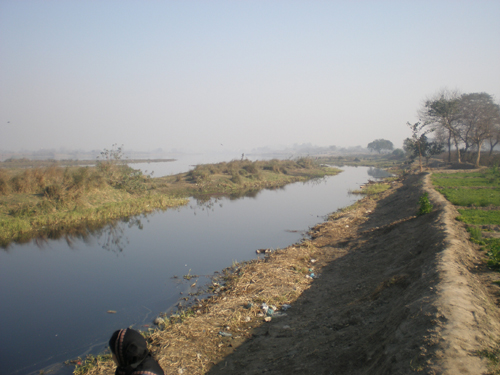
Yamuna River at ITOWe invite you for a talk on the Yamuna In Delhi by Vikram Soni, today (20 December, 2008) at 4 pm at Kashmere Gate.

Date: December 20th, 2008
Time: 4 – 5 pm
Venue: Kashmere Gate – the monument at Kashmere Gate

Vikram Soni will be talking about the (economic) importance of river Yamuna’s floodplains and the need to keep the floodplains intact for providing water to the city and in keeping Delhi alive and full of life.

A short film of 22 minutes will also be screened at the beginning of the film.

The talk will happen just outside the Kashmere Gate Metro Station, at the Kashmere Gate monument, along the ‘chabeel’ – and drinking water, will be available – as it should be – for free.

We hope to see all of you there.

48c delhiFor further information, please contact:

Govind Singh
98111 47754

Comments

Invitation: 48c Public.Art.Ecology

48c Public.Art.Ecology: Public Eco.Art in Delhi City

48c Public.Art.Ecology is a city wide festival wherein some 24 art projects themed on ecology have been installed in some 8 public spaces in the city.

The festival has been on since December 12th and was launched by the Lt. Governor of Delhi at Max Mueller Bhawan.

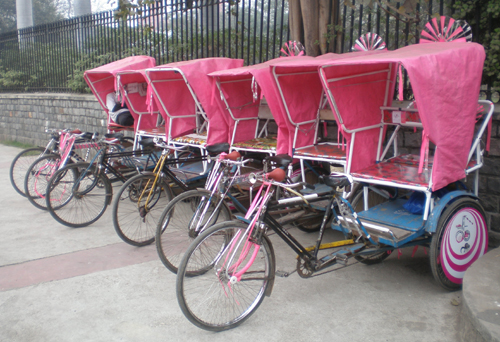
So far, thousands of citizens have been to the sites, experienced the installations and left their feedback. We’ve literally painted the city pink, and you cannot miss the projects at the below mentioned sites.

We invite you to make a trip to the sites at Kashmere Gate, Jantar Mantar, Roshanara Bagh, Palika Bazaar/CP, Ramlila Maidan, Chandni Chowk, Barakhamba Road and Mandi House!

As Delhi Greens, the outreach coordinators for the festival, we have woven a series of talks and walks (not to mention the urban eco-bus tours) around the festival.

We launched the first-of-its-kind Delhi Urban Ecotourism Bus trip last Saturday (13th December) and would be taking another tour today and then another tomorrow.

Today (December 19th), at 4 pm, we have organized a talk by Faiyaz A. Khudsar, Wildlife Ecologist and Park Manager, Yamuna Biodiversity Park. He would speak on ‘Parks and Urban Biodiversity’ at 20, Barakhamba Road, New Delhi. The interactive talk will be for one hour, just below a tree hanging from a crane!

Tomorrow (December 20th) at 4 pm,we have organized a talk by Professor Vikram Soni on the “Yamuna in Delhi” at Kashmere Gate (the monument). He would show a small film on the (economic) importance of the Yamuna floodplains to Delhi and have an interactive discussion thereafter.

All of you are invited for the above mentioned two interactive talks.

We are concluding the Festival with an Indian Ocean performance (Live in Concert) at Hamsadhwani Open Air Theater, Pragati Maidan, Delhi). All of you are invited for the same, and free passes can be collected from Max Mueller Bhawan, KG Marg, New Delhi.
We hope you would visit the 48c Public.Art.Ecology – now in its last three days – and would experience Public Eco.Art. like never seen before in Delhi!

For more info, visit: http://48c.org
For outreach plan, visit: http://delhigreens.org/48c

For any information or clarification, please contact me at: 98111 47754

Best,
Govind Singh
Delhi Greens

Comments

Invite: Talk on Parks and Urban Biodiversity at 20, Barakhamba Road

All of you are invited to a Public Talk by Wildlife Biologist Faiyaz A. Khudsar (Park Manager, Yamuna Biodiversity Park) on “Parks and Urban Biodiversity” (with special emphasis on Delhi).

Parks and Urban Biodiversity

The greens need their space, and that is why we gather to discuss the hows and whys.

Date: 19th December, 2008
Time: 4 to 5 pm

Venue: 20, Barakhamba Road (its just behind the Barakhamba Metro Station), just ask anyone if they have seen a tree hanging from a crane anywhere around.

Hosted by: 48c Public.Art.Ecology

20 Barakhamba Road is a structure that failed to turn into a several floored building….and now, refuses to do so. It is the same bunglow that it was..decades ago.

Hope you would join us in this task of maintaining the greens of Delhi – green.

For further information and for any clarification, please contact:

Govind Singh
98111 47754
Delhi Greens

Comments (1)

Invitation: The Vulture Readings at Max Mueller Bhawan

48c Public.Art.Ecology

48c Public.Art.ecologyThe Vulture Readings: Interaction and Reflections on Ecology and Extinctions.

“It is true, we all seem to be going somewhere. Very fast, and quick. The question is where? All around us, there are extinctions, as things get blurred and we cannot see what we step on, all sacrificed for the sake of the journey. But where does the journey lead to – what would we have learnt during it, that will form our future.

It may be said that the barrenness will be fertilized with new dreams, new hopes and new possibilities. Yet, is that true? Do we really believe in this idea, or is the speed of the present so exhilarating that we cannot make sense of the landscape any more, since it is so very fuzzy? Maybe we are scared to see that it may be barren, very, very barren.

It seems ‘knowledge has substituted the ‘knowing’ of things.

Our ‘ecologies’ seem to be changing. In the way we relate to the city, or the manner in which our network of relationships functions. In the extinction of natural systems, of a biodiversity of ideas and connections, the discourse is reduced.

When wisdom passes, do the wise pass on too?

With the above as the backdrop, all of you are invited to the Vulture Readings, as part of the 48c Public.Art.Ecology Festival

Date: 18th December, 2008 (Thursday)
Time: 4 pm to 6 pm
Venue: Max Mueller Bhawan lawns, KG Marg, New Delhi – 110 001

The Panel will be led by Ravi Agarwal. Other eminent personalities from the city would share the panel with him.

For more information, please contact:

Govind Singh
Delhi Greens
98111 47754

Comments

“Sanskriti 350″, Sanskriti School Calls for an Eco-Clubs Unite Against Climate Change

Sanskriti 350

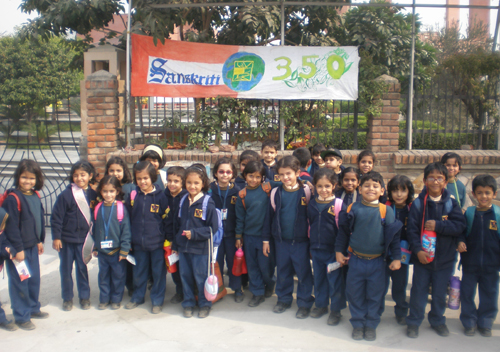
Established by the Civil Services Society in the Indian capital city of Delhi, Sanskriti has become one of the leading schools in the little over ten years of its establishment. The school recently won an award for its work with ragpickers and slum-children and has addressed its share of equity issues. Today, right in front of my eyes, Sanskriti School became another first.

The school called for ‘Sanskriti 350′ – an inter-school event inviting eco-clubs from over 30 schools, in a bid to highlight the importance of 350. Remarkably enough, Sanskriti (meaning culture) 350 was an event completely for the youth, by the youth and of the youth!

The youth event had everything from a green fashion show, a brainstorming session, green film competition, ad-mad, to a rock-band competition titled ‘the sounds of 350′! The event saw a good participation and was inaugurated by the Secretary, Environment in the Government of Delhi Mr. J.K. Dadoo – who elaborated on the science and policy of climate change. He also warned the students of a disease called ‘affluenza’ which, according to him, is a major threat to the global environment.

The enthusiasm of the young adults and the energy levels in them clearly suggested that the youth has understood the urgency to act today in order to ensure their survival, and the survival of their children and grandchildren on this Planet. It was most inspiring when the School Principal Mrs. Abha Sahgal took to stage and declared that her generation had clearly not done enough to protect our environment and that she is whole-heartedly with the youth – leading the green movement.
48c Public.Art.Ecology
“Sanskriti 350″ also saw participation from the Indian Youth Climate Network, Delhi Greens and the 48c Public.Art.Ecology Festival being celebrated in the city from 12th to 21st December, 2008.

Comments (5)

Experiencing Delhi Art

The public art ecology related ‘conversations’ at the 48c Public.Art.Ecology Festival, of various artists, architects, art critiques, curators of museums and others was an amazing experience. I will highly recommend that you participate in what ever way you can in this public art festival celebrating the city of Delhi. The convergence of each and every one on ‘actions that would make a difference’ is something that is very inspiring. Just being there to witness the enthusiasm, what is happening without being judgmental is fun…and you can count on me for being participant observer for it where ever I could.

48c Public Art Ecology Festival in Delhi

The ecology context within public art is related to the whole issue of Delhi aspiring to be a Global city and the balance that is demanded from Climate change consensus. Large metropolitan cities with its diversity of spaces and communities that occupy them is a relatively recent forms of civilization. Climate change consensus brings forth a new realm of possibilities for sustainable Delhi. The old way of life becomes unsustainable.

Climate change consensus has transformed the way we do everything in every day life, we are actually choosing to do things differently, we are accepting the way thing are the way they are not and committed to making a difference in every area of our life. We are now Exploring new way of life with sustainable options in sectors such as water, garbage, waste water, energy, transport entertainment… you name it. New technologies, new sources, with new institutional arrangements and new forms of action at the individual and community level then becomes possible and needs support.

48c the Public Art Ecology Festival

The 48 C conversations, made these options more explicit in the context of inclusive Delhi. It listed actions at individual or group level and the need to build linkages across different communities of practice to providing services and support for a new image of Delhi. That truly inspired me.

The whole of experience of Delhi, as we know it is being transformed right now. It is an exciting phase with lots of new possibilities calling each one of us into action. The first Public Art Festival going on right now till 21 December has made it possible…it is a must have experience.

Comments

Quotes From the Earth 2008: Environmental Film Festival

Toxics Link and India International Centre (IIC) invite all to the “Quotes from the Earth”, a biannual environmental film festival.

The festival, held since 2004, would showcase 20 exemplary works on celluloid, by some of country’s most renowned environmental filmmakers, that portray the global struggle against climate change, hunger, unclean water, polluted urban scapes and difficult survival.

Categorized under 5 subheads namely Climate change and Energy Efficiency, Survival, Hunger, Urban Scapes and Water, the film festival would also host expert panel discussion on burning issues like Sustainability and Globalisation.

Date: 19th and 20th December, 2008
Venue: Auditorium, Main Building, India International Centre(IIC) 40 Max Mueller Marg, Lodhi Road, New Delhi-110003

48c Public.Art.EcologyThe Festival will be inaugurated by Dr. R.K.Pachauri, Director General of TERI.

Screening Partner: PSBT

Film Event Partner: 48c Public.Art.Ecology

Comments

48c Public.Art.Ecology Schedule for December 16 – Tuesday!

350 Because the world needs to know0930 hours:  The festival goes to Sanskriti School, which has called for “Sanskriti 350“ - an eco-clubs unite, called for by the school – to ensure a clean, bright future and to ensure a greater cooperation between schools and students to achieve the same.

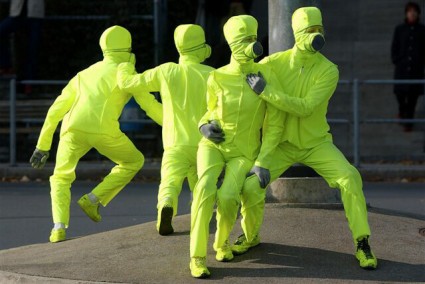
1500 – 1600 hours: Pantomine Play by the German School at Jantar Mantar!

Meet the Artists at Jantar Mantar!

1700 to 2030: Film Screening at Barakhamba Road.

48c Public.Art.EcologyAll the spaces invite you to check them out! Most sites are accessible by the Metro.

Roshanara Bagh | Kashmere Gate | Chandni Chowk | Ramlila Ground

Barakhamba Road | Mandi House | Jantar Mantar | Connaught Place

Comments

Click for New Delhi, India Forecast