

Second India-Wide Dolphin Census Launched at Bijnor
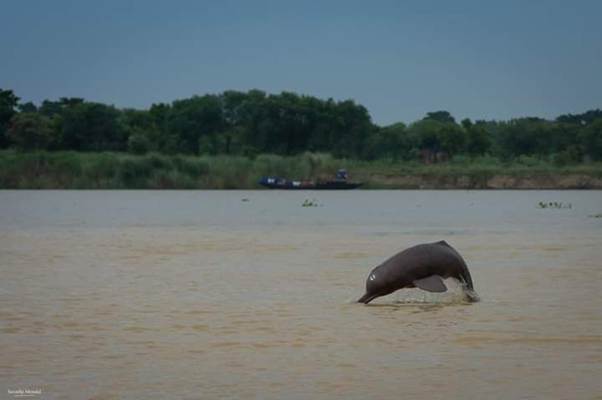
The Ministry of Environment, Forest and Climate Change (MoEF&CC) has launched the second nationwide estimation of riverine and estuarine dolphins as part of Project Dolphin, a flagship effort to strengthen scientific understanding and conservation of freshwater dolphins in India.
The initiative began at Bijnor in Uttar Pradesh, where officials of the State Forest Department and researchers were trained in standardized field survey methods. Organized by the Wildlife Institute of India (WII), Dehradun, the programme involves collaboration with partner organisations including WWF-India, Aaranyak and Wildlife Trust of India.
What the Survey Entails
The second round follows a protocol launched last year and uses a mix of field observations and advanced technologies such as hydrophones for underwater acoustic monitoring. The first phase will cover the main stem of the Ganga River from Bijnor to Ganga Sagar and part of the Indus River, while a later phase will extend to the Brahmaputra basin, tributaries of the Ganga, the Sundarbans, and Odisha. In addition to Ganges River Dolphins, scientists will collect data on Indus River and Irrawaddy dolphins, habitat conditions, threats, and other species of conservation priority.
The programme aims to generate robust scientific data that can inform government policies, habitat protection strategies and long-term conservation planning.
Why This Matters: The Status of Dolphins in India
River dolphins are often called living fossils because they evolved nearly 30 million years ago and retained primitive traits.
India is home to two freshwater dolphin species:
-
Ganges River Dolphin (Platanista gangetica gangetica) — found in the Ganga, Brahmaputra and several tributaries and declared the National Aquatic Animal of India in 2009.
-
Indus River Dolphin (Platanista minor) — primarily found in the Indus system, with small populations reported in India’s Beas River.
Both species are listed as Endangered on the IUCN Red List and receive the highest level of legal protection under India’s Wildlife (Protection) Act, 1972. The Ganges River Dolphin is functionally blind, using echolocation to survive in turbid waters. Unlike marine dolphins, it cannot survive in saltwater, making river connectivity crucial. Dolphins act as indicator species—their decline signals river ecosystem degradation. Females have a low reproductive rate, usually giving birth once every 2–3 years, which slows population recovery.
Interestingly, healthy dolphin populations often correlate with better fish diversity, benefiting local fisheries and livelihoods. A nationwide survey conducted from 2021 to 2023 under Project Dolphin estimated approximately 6,327 river dolphins across eight states, with the largest numbers in Uttar Pradesh and Bihar.
Habitat Characteristics
Riverine dolphins are adapted to deep, flowing freshwater systems. The Ganges River Dolphin prefers deep pools and confluence zones where fish are abundant. Their small eyes are adapted to murky waters, and they rely primarily on echolocation to navigate and hunt.
Key Threats Facing Dolphins
Despite legal protection, several human-driven pressures continue to threaten river dolphin survival:
1. Habitat Fragmentation
The construction of dams, barrages and irrigation infrastructure fragments river habitats and restricts dolphin movement, isolating populations and reducing genetic diversity.
2. Fishing and Bycatch
Dolphins are often entangled or killed in fishing nets, both accidentally (bycatch) and in some cases intentionally to reduce competition with fishers or for traditional uses such as oil and bait.
3. Pollution and Water Quality
Industrial, agricultural and domestic pollution degrade water quality, reduce prey availability, and expose dolphins to toxic substances — recently highlighted by scientific findings of high levels of harmful chemicals in the Ganga.
4. River Traffic and Disturbance
Increased boat traffic, dredging and noise disrupt dolphin behavior and habitat use.
5. Climate Change
Shifts in flow patterns and increasing salinity (especially in estuarine fringes like the Sundarbans) influence habitat suitability for freshwater species.
Conservation Initiatives and Outlook
Beyond censuses, India is strengthening dolphin conservation through:
-
Project Dolphin (launched in 2020) — to improve habitat, involve local communities, and enhance monitoring.
-
Protected Areas — such as the Vikramshila Gangetic Dolphin Sanctuary in Bihar, a critical conservation site providing protected habitat for dozens of dolphins and other riverine wildlife.
-
Capacity Building — regional training workshops for forest staff help standardize data gathering and field responses.
The second rangewide estimation marks a significant step forward in understanding the current status and challenges of freshwater dolphins in India, adding new spatial coverage and species focus to the conservation effort. These developments are key examples of evidence-based wildlife management, inter-agency cooperation and the integration of science into national environmental policy.