Archive for November, 2009

Call for Action for Saving the Climate at Dastkar

Jardhariji of Beej Bachao Andolan at Dastkar

Vijay Jardhari of the Been Bajao Andolan from Uttarakhand, was one among many to call for action for  ’saving the climate’ at Dastkar, the Nature Bazaar that recently concluded in the Indira Gandhi National Center for Arts (IGNCA), New Delhi

Image Credit: Konsam Nirmala

Comments

Targeting the Urban Poor

Without inclusive growth, that includes the poor, the rich cannot survive in a city. Thank you for appreciating the development and environment combination of the blog. Your time is precious and I appreciate you making it available to comment on the Blog.

There is a dominant tendency on our part to think that poor living in the cities are a homogenous lot with same problems and therefore need uniform solution in the form of anti poverty programmes. JNURM (Jawaharlal Nehru Urban Renewal Mission) is an example of inclusive growth for the poor in the cities. Although in all honesty, while it does make efforts toward targeting heritage cities and look for unique needs of different cities, it does not take into account the needs of different slum settlements within a city.

My own experience indicates, as those of us who have worked in different slums within a city may have noticed, that each slum is unique and different slums have different priorities. Some slums have small informal but thriving business. Therefore for them earning a livelihood is not a concern, but schools for their children is an issue or medical help for the sick is top priority since they do not have an access to it. In some other slums located next to a flowing nullah or open drainage, sanitation and water may not be that big an issue as is access to electricity and therefore a means to earn livelihood. Yet another slum may have everything but getting loans at low interest rates for short durations like a day or two for running their small businesses may be a problem.

Thus if we define ability to earn livelihood as human capital, ability to have adequate infrastructure as physical capital, access to school and health services as social capital and access to short term loans as financial capital, we can list the ranking of these capital deprivations. This would allow us to have specific interventions relevant to the slum instead of the current generic interventions for poverty alleviation. The Journal “Habitat International” Vol 33 Issue 4 October 2009 has an article “Matching Deprivation mapping to Urban Governance in three Indian Mega Cities” (pp 365-377,  Authors: Isa S A Baud, Karin Pfeffer Namperumal Sidharan and Navtej Nainan). It talks of new ways to map poverty in  three Indian mega cities, including Delhi, based on ward level data. It uses four criteria of social capital, physical capital, human capital and financial capital to create an index to differentiate between ward level slums. Census data at ward level is used.

An ideal inclusive growth strategy for the poor in the cities would be that each one gets services that they want rather than what they need as determined by someone else.  What is missing for the poor households is freedom to choose freely and being acknowledged that they can make smart and responsibly choices for themselves and their future. The paper is an attempt towards this ideal.

Comments (1)

A Must Read: City Improbable: Writings on Delhi

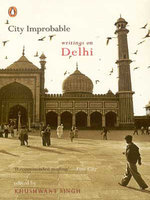
City Improbable: writings on DelhiFollowing is an excerpt from City Improbable writing on Delhi, a Delhi anthology edited by Khushwant Singh. The book is a complete rendezvous with Delhi, its historical as well as recent past and its present and is aptly reviewed by the Telegraph as, “Anyone who has ever had anything to do with Delhi, or is interested in the history of cities, should take a look at this collection”.

Needless to say, it is a collector’s item that has tried to capture the mystical majesty of the city of cities in a wonderfully comprehensive manner!

But you don’t see that kind of thing as often as you used to. Delhi has become a very polluted and congested city. It has more cars than Bombay, Calcutta and Madras put together. So there is more poison on the air than in the other cities. That and the reckless use of pesticides has taken a heavy toll of insect, amphibian and bird life. In the rainy season, no frogs croak, no fireflies or moths are to be seen. Vultures have disappeared, sparrows have become scarce. The incidence of asthma and bronchial ailments has shown an alarming increase, and if residents of Delhi mange to survive it is because of the greenery around them.

The not-so-loveable aspect of Delhi is entirely manmade. Delhiwalas are about the most inconsiderate of the human species you can encounter. They think nothing of throwing their garbage into their neighbour’s homes or on the road. they observe no road rules and are ever eager to overtake others, blow their horns and get into violent arguments. On an average four to six people are killed every day by cars and buses. About the same number are murdered in cold blood. Thefts and burglaries  are a daily feature. Molesting women in buses is a common practice.

Also Read:

Comments

Cross Cutting Agra

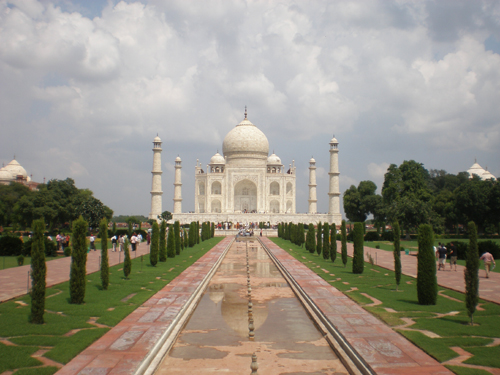
Taj Mahal in Agra

The Taj Mahal: A resource curse in the ‘heart’ of India?

Mention or lack of mention of just one word makes a difference. Thank you for appreciating the film review with ‘Beautiful.’

I had the privilege of being present in an awesome event in Agra. Empirical facts indicated that of the 378 settlements that can be classified as slums, one slum settlement with about 400 households was successful in having 94 twin pit latrine with pour flush in the city. It took the community and the NGO working with them together over three year to achieve this. So the question is, whether it is worth the time, money and efforts that went into this project?

The short answer: the context that this community comes from is what is makes the effort totally worth it.

The long answer requires a brief peek into history. Villages in Utter Pradesh easily cover over a 5 to 7 km radius and are relatively spread out. They have three to five satellite settlements typically inhabited by the Scheduled Castes. The ‘East of Yamuna’ whether it was for Delhi or Agra, is where the Mughal Empire never ‘looked.’ This continues to be the situation with the present day city governance in Agra. Benefits of international tourism do not reach these settlements, and only causes major problems of transport and housing. The relative difference in the lifestyle of visiting national or international tourists and the inhabitants of Agra is very stark. Additionally the city benefits very little from their revenues and their spending. So the people of Agra look upon the Taj Mahal as a curse rather than beauty.

Slums in the east of Agra are not really ‘the urban slums’ created by first generation migrants coming into the city in search of livelihood, but a village satellite that has got included in the expanding city of Agra. And unlike urban slums, where the land ownership is with the city, 87% the house owners own the land too. The Cross Cutting Agra Project facilitated the setting up of 94 toilets in the households, paved roads within the settlement and cleaning up of the lanes to make it more walkable and tourist friendly. The livelihood generation activities set up by Self Help Groups (SHGs) over the last three years, are now paying off. The village is on the ‘tourist map.’ Tourists visit the village, shop and have tea here. They spend time appreciating the rural view of Taj Mahal, across the river, through the forest. For once, lack of mention of just one word “caste” makes a difference.

Comments (1)

Toxics Link Public Lecture Series: Screening of The Final Tide at IIC

ToxicsLink LogoToxics Link’s Environment & Health Public Lecture Series

The Final Tide

Impact of Climate Change on Urbanscape: Sustainability Issue

Climate change has long-since ceased to be a scientific curiosity, and is no longer just one of many environmental and regulatory concerns. As the United Nations Secretary General has said, it is the major, overriding environmental issue of our time, and the single greatest challenge facing environmental regulators. It is a growing crisis with economic, health and safety, food production, security, and other dimensions that include designing sustainable city forms.

Coastal zones are particularly vulnerable to climate variability and change. Key concerns include sea level rise, land loss, changes in maritime storms and flooding, responses to sea level rise and implications for water resources. Rising sea levels inundate wetlands and other low-lying lands, erode beaches, intensify flooding, and increase the salinity of rivers, bays, and groundwater tables. The impacts of climate change in small islands like the Union Territory of Lakshadweep in the Arabian Sea manifests itself in myriad forms.

Today’s crop of city planners and designers strive to achieve sustainable urban development. In other words they try to achieve a balance between the development of the urban areas and protection of the environment with an eye to equity in employment, shelter, infrastructure, transportation and various basic amenities

Toxics Link invites you for a screening of the film on 11 February at India International Centre.

Screening: The Final Tide; duration 10 minutes, By Vikram Mishra

Panelist:

  • Dr A.K. Gosain, Head Of Department, Civil Engineering, IIT Delhi
  • Dr K.T. Ravindran, Head of Department, Department of Urban Design, School of Planning and Architecture, Delhi
  • Mr Vikrm Mishra, Environmental Filmmaker

Date: 20th Nov 2009, Friday
Time:
6:30 p.m.
Venue: Conference Room 1, India International Centre, Lodhi Road, New Delhi (In collaboration with India International Centre)

For further information, please contact:
Suparna Dutta: suparna@toxicslink.org
Nitin Jain: nitin@toxicslink.org
E: info@toxicslink.org

Comments

‘Sealing the Deal’ on Climate Change in Copenhagen

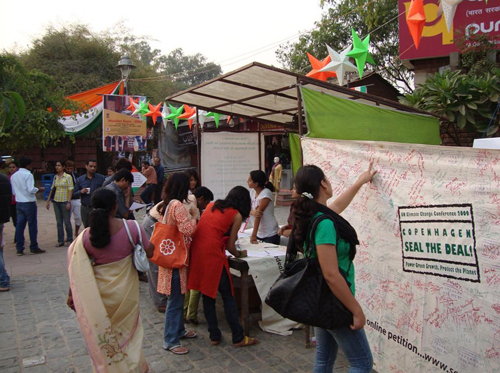
Seal the Deal Campaign at Dilli Haat

Delhi Greens and the Center for Climate Justice & Equity (CCJE) recently came together at Dilli Haat to take forward the Untied Nations-led Seal the Deal Campaign aiming to galvanize political will and public support for reaching a comprehensive global climate agreement in Copenhagen in December.

On December 7, 2009, Governments will gather in Copenhagen, Denmark to respond to one of the greatest challenges facing humanity. The main question will be how protect the planet and create a green economy that will lead to long-term prosperity. Reaching a deal by the time the meeting ends on December 18 will depend not only on complex political negotiations, but also on public pressure from around the globe.

With this understanding, the two day long stall at Dilli Haat aimed at informing people about the COP15 at Copenhagen and also raising awareness on the impacts of climate change the urgent need to take action today lest there may not be a tomorrow. People also signed the ‘Seal the Deal’ petition banner in large number.

The petition is basically a reminder to all that our leaders must negotiate a fair, balanced and effective agreement in Copenhagen, and that they must seal a deal to power green growth, protect our planet and build a more sustainable, prosperous global economy that will benefit all nations and people.

You too can participate and join this global call for a just and equitable deal in Copenhagen this December. Click here to Sign the Petition!

Comments (1)

Invitation: Dastkar the Nature Bazaar at IGNCA

Dastkar Nature Bazaar

Dastkar is celebrating the Annual Craft and Environmental Fair NATURE BAZAAR – India’s largest crafts fair – with 200 stalls and participants from all over India…selling handicrafted products in a myriad different materials and techniques.

Also to be checked out, music, dance and folk performances throughout the day. And a food court with Indian and International cuisine.

Date: 5th to 14th November, 2009
Time: 10.30 am to 7.30 pm
Venue: Indira Gandhi National Center for Arts (IGNCA), 1, C.V. Mess, Janpath, New Delhi

A MUST check out: Beej Bachao Andolan and Vividhara Stalls — one selling organic produce, farm, natural and wild products (Stall No. 103) and an Organic Food Cafe selling organic khana and a huge tea, etc. range…in the Food Court.

Comments (2)

Coral Reefs

Coral Reefs

The 14th of November, also known as Bal Divas, is the birthday of Chacha Nehru–our first Prime Minister and to put it in the current context–Rahul Gandhi’s great grand father. Continuity, complexity of relationships and interrelatedness to the web of life is the celebration.

A beautifully done film festival called CMS Vatavaran recently reflected it. One film of particular appeal was a Japanese one titled Kishke filming complex environmental issues with a very simple narrative. At the very first level, it is the story of a little boy named Kishke–about 10 years of age–who has just lost his grandfather. Once when had spent a summer with his grandfather on the sea coast village in North Japan, he had made a promise to his grandfather that he will plant a seed in his name, when he is no more. He now lived with his mother in Tokyo and has just had a summer break. Before the school closed for the break, he learns about the various environmental problems that cities in Japan have faced since 50’s due to industrial pollution, smog, water pollution, mercury poisoning, etc.

Very subtly, the film comments on the present. When Kishke walks back to his house in an apartment block, the backdrop is that of factories letting out white smoke. He lives with his mother alone, as his parents have separated and are on the verge of divorce. He spends many an evenings alone as his mother is coping  with this stress by drinking. He is shown to buy his own food from the nearby restaurant and misses the family, when he sees his classmate out with his parents. Each frame is well thought of. Multiple and complex interpretations are possible and it is left for the audience to use their imagination.

He fulfills the promise he made to his grandfather. He takes his pocket money and travels alone to the same island. He has to take a train, a flight and a bus to reach it and even gets lost once.  He is helped on the way by strangers who are only inspired by his commitment. He is not irresponsible or running away, just committed to the cause. On the way, he inspires others equally committed to the cause of saving the planet. A woman marketing executive in a chop stick manufacturing company in her thirties wanting to market reusable and eco-friendly chop sticks. An environmental activist, in his 50s, who has successfully enrolled villagers to clean up the beaches, and village council to treat the waste harmful to sea creatures. Finally, there is a Professor of Oceanography in his 70s, with an assistant in his thirties studying the coral reefs. Kishke succeeds in not only finding the seed and planting it but also becomes cause in the matter of bringing his parents to communicate with each other.

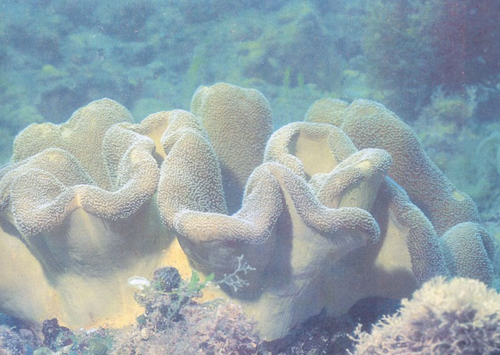
The film is very creatively produced with layers upon layers of interpretations in each frame. The final one that I am most inspired is about Coral Reefs that are multi-coloured when alive and get bleached when dead. Its parallel to human institutions that we create to sustain ourselves–leading to our complex multi-coloured cultures–is uncanny. Losing out on our institution of marriage and family and the impact it will have on our society in the long run is a parallel to the bleached and dead reefs.

Image Source

Comments (1)

Migrants and the Migration Pattern

ISBT at Kashmere Gate

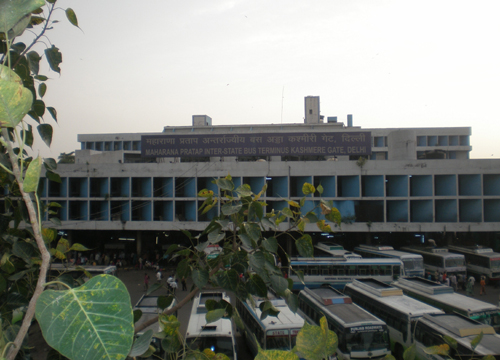
When we say ‘Our Delhi’ we mean it is our city, the city belongs to us and not to all those ‘others’ who are coming to the city in search of jobs or higher education. Therefore we have some preconceived notions about who we consider as outsiders, migrants. The popular belief about migrants is that they are losers, dregs of society who could not adjust to their parents or neighbours. Or they are here to compete with us and taking away our jobs. And that determines our attitude toward migrants.

The difference between migration and exodus is why people leave their origin. Migration is a choice that they exercise. Exodus is persecution and plight. Interestingly even animals migrate from one habitat which is basically seasonal, and for better options and opportunities. Why can’t we grant the same grace to us humans?

The Human Development Report 2009 was recently released by UNDP with the theme as migration. The report highlights that contrary to popular belief, no such clear migration pattern emerges in mobility and development. On the other hand, the report indicates that people from developed countries tend to migrate to other developed countries, and people from developing countries tend to migrate to other developing countries. Elites from developing countries migrate to developed countries where they are ready even things that they would not do in their own country, work wise.

Mobility and development are related and mobility is a reality. Mobility allows us to better our social development indicators for us, our family, and our next generation. The impact of migration on migrants and on the host population are both positive and negative. Finally the report says that not the poorest of poor, but those relatively better off, those who can afford to be mobile, migrate. Interesting isn’t it? My own field work in East Delhi Slums substantiates this.

Starting from the 70s, our skilled Delhi/ Punjabi rich agrarian farmers migrated to Canada, while the south Indian skilled craftsmen migrated to the Middle East and our top of the top class doctors to USA. In the 80s and 90s, the IT boom attracted our skilled professionals.

You know of any such friends or relatives and their stories? How about sharing some of those with us?

Comments (1)

Click for New Delhi, India Forecast