
India Is Building AI Data Centers While Overlooking Water Consumption
India’s AI boom has triggered a rapid expansion of data center capacity, yet water consumption regulation in this sector remains virtually invisible. None of the major regional data center policies require operators to disclose water usage through a centralized reporting system. The conflict between infrastructure scaling and water resource protection is intensifying, while mandatory oversight mechanisms are essentially absent.
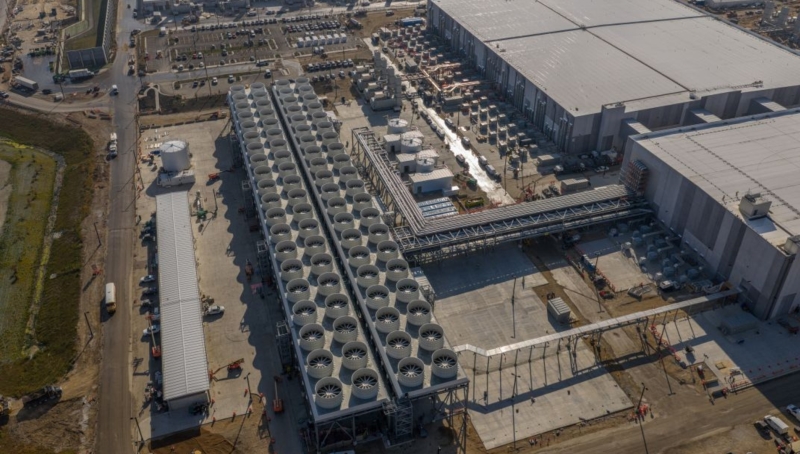
Every AI query ultimately reaches a physical server that requires cooling. More queries mean more servers, and more servers mean more water. Without transparent rules, this becomes a long-term water security risk for entire metropolitan areas.
Why India Is Moving So Fast
The growth drivers are well documented. According to a global IBM study, 59% of Indian companies have already adopted AI — the highest share among all surveyed countries. Deloitte ranks India first in generative AI adoption across the Asia-Pacific region. The government is backing the trend financially: the IndiaAI Mission allocates INR 10,300 crore (approximately $1.2 billion) over five years to accelerate the national AI ecosystem.
India generates nearly 20% of the world’s data but holds only 3% of global data center capacity. The effort to close that gap is moving rapidly.
From Streaming to iGaming – Data Centers in India Are Being Built for More Than Enterprise Use
A significant share of new capacity serves not only the corporate sector and government AI projects, but also the rapidly growing domestic demand for digital services. India already ranks among the top three video streaming markets, and mobile traffic to entertainment platforms has grown by more than 40% over the past two years. This includes a boom in interactive formats — from cloud gaming to live dealer casinos india online, which, according to industry reports, are showing double-digit audience growth. All of these services generate a continuous stream of requests requiring real-time processing, and therefore constant server cooling. This is why the water consumption question extends beyond AI computing to the entire online services ecosystem supported by India’s data center infrastructure.
The Scale of the Load in Numbers
The statistics illustrate how quickly this is unfolding:
- Data center capacity has quadrupled from approximately 375 MW in 2020 to nearly 1,500 MW in 2025.
- The cooling market, according to the Office of the Principal Scientific Adviser to the Government of India, is projected to grow from $2.1 billion today to more than $7 billion by 2030.
- Annual water consumption by the country’s data centers is estimated at approximately 150 billion liters, a figure that is forecast to double by the end of the decade.
Bengaluru Draws from the Cauvery — and Data Centers Draw Alongside the City
Karnataka bears a substantial share of the burden: the state hosts around 32 data centers, with nearly 30 of them concentrated in Bengaluru, a city that has experienced recurring water crises in recent years. According to Deloitte estimates, a single 20 MW data center consumes approximately 1.4 million liters of water per day — the equivalent of the daily needs of around 27,000 urban households.
The city is already operating on the edge: Bengaluru’s demand reaches 3,000 MLD (million liters per day), while supplies from the Cauvery river cover only around 2,000 MLD. Thousands of government-operated boreholes are reportedly running dry.
A Promise of 24/7 Water Access — Without Answering the Key Question
Against this backdrop of scarcity, Karnataka’s data center policy guarantees operators uninterrupted access to water on a 24/7 basis. The document does not, however, specify how resources will be allocated during drought periods or how data center priorities relate to the needs of the general population.
Mumbai and Chennai Under the Same Pressure
Two other metropolitan areas, Mumbai and Chennai, together account for approximately 70% of India’s data center capacity as of 2025. Both cities have long been known for chronic water stress. A clear pattern is emerging: water-hungry infrastructure is concentrating precisely where water resilience is at its lowest.
Three Links in a Chain That Does Not Yet Exist
Effective water use oversight requires three interconnected elements: monitoring (systematic measurement of water withdrawals and discharges), reporting (regular submission of data to a unified standard), and verification (independent validation of accuracy). Without this chain, it is impossible to assess whether operator commitments are being met or whether load-reduction measures are working. Planet Tracker ranks India second only to Indonesia among Asian countries by the number of data centers located in zones of “extremely high” water stress. For investors, authorities, and local communities, this is a signal: risk may be accumulating unnoticed precisely because of the absence of data.
Technology Choices Made Today Will Define the Water Footprint for Decades
Data centers are built to last for decades. The type of cooling, the water source, and the degree of dependence on local resources are all determined at the design stage and are difficult to revise once infrastructure has matured. Retrofitting costs significantly more than embedding sustainable solutions from the outset. The window of opportunity for establishing the right rules exists right now, while the industry is still in an active growth phase.
Among the measures that can be integrated into regulation at the current stage:
- Mandatory water stress assessments during site selection.
- Unified water use efficiency benchmarks for the industry.
- Priority use of treated and recycled water for cooling systems.
- A centralized system for monitoring, reporting and verification (MRV).
- Oversight covering not only water withdrawals but also discharges, including the risks of thermal pollution of water bodies.
Growth Without Undermining Water Security Is Possible — but Not Automatic
This is not about slowing India’s AI ambitions. The question is whether the expansion of data centers will be accompanied by measurable water use standards and mandatory transparency. Such an approach simultaneously reduces environmental risks, improves market predictability and builds trust among communities living alongside the infrastructure of the future.