

Panaji Under Pressure from Tourism and Casinos
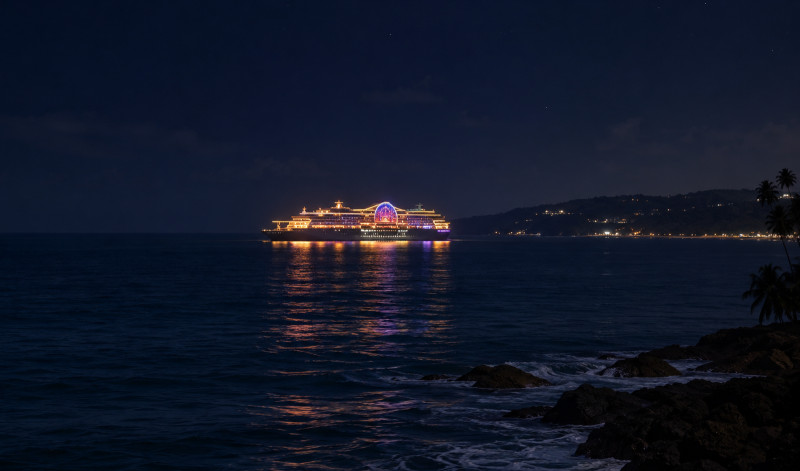
The capital of the Indian state of Goa is undergoing a transformation that residents increasingly describe using two neologisms. “Touristification” and “casinofication” may sound like invented words, yet they have firmly entered the lexicon of Panaji (Panjim) residents. Historic neighbourhoods, the Mandovi riverfront and the rhythms of everyday life are changing under the pressure of tourist flows and the expansion of the gambling industry. Concrete mechanisms underlie these processes – mechanisms documented in academic literature – and their consequences are already being felt at the level of shops, parks and residential streets.
Three Terms That Explain What Is Happening
Mexican geographer Antonio Ojeda and co-authors define “touristification” as a complex process in which multiple actors transform a territory through tourist activity. The term emerged in the 1980s as a neutral academic concept, but from the 2000s onwards it acquired a distinctly negative connotation, describing the displacement of local residents, overcrowding and the conversion of a city into a commercial “tourist commodity.”
“Casinofication” grew out of observations of Las Vegas, where casinos spread even into the suburbs. Applied to Panaji, the word became a metaphor for the uncontrolled growth of the gambling industry as it penetrates the urban fabric. The third term, “solastalgia,” was proposed by Dutch researcher Lidija Lalicic. It denotes a collective melancholy of a community — a homesickness felt while still at home — that arises when familiar spaces are deformed under the pressure of overtourism.
Why These Words Came to Define Panaji
All three concepts proved applicable to the capital of Goa because of the year-round tourist burden on its historic districts and the visible influence of casinos on the city’s rhythm, safety and the economics of everyday services.
Flashpoints Where Residents See Change
Sao Tome and Fontainhas, the neighbourhoods of the famous colourful (Portuguese-era) houses, have lost their intimate character and become permanent tourist circuits. Church Square is experiencing rising traffic, conflicts over parking and noise. The Mandovi riverfront, once a “scenic” space, has become an overcrowded tourist corridor. Among the specific problems recorded by residents:
- chaotic parking and traffic violations;
- round-the-clock noise and parties;
- invasion of privacy and antisocial behaviour, including urination and defecation in the streets;
- restricted movement through historic streets.
Residents describe their situation as living like “museum exhibits.” Any attempt to call for order is perceived by tourists as an obstacle to their entertainment.
The Problem Is Not Tourism Itself, but Imbalance
The author of the original piece emphasises that he is a traveller himself and does not oppose tourism as such. In Panaji, however, in his assessment, the proportions have been distorted, and the city’s marketing pushes it towards a “round-the-clock attraction” model rather than careful stewardship of the residential environment.
Heritage-Based Urban Planning
At an online workshop on heritage-based urban planning, attended by participants from India, South Africa, Hong Kong and South Korea, a key idea was articulated in September. Heritage must be “placed at the front” of planning. The starting point should be identifying what constitutes the city’s value, and only then designing functions, businesses and regulations. The practical implications of this approach for Panaji form a chain of measures:
- development of clean, reliable and affordable public transport;
- creation of park-and-ride facilities on the city’s outskirts;
- frequent routes to and from the city centre;
- pedestrianisation of residential streets and relief of pressure on historic districts.
Lessons from Daman, Which Chose a Different Path
The Union Territory of Daman, Goa’s “younger sister,” chose a different model. Its authorities and citizens rejected the expansion of the casino industry along with its attendant problems. The historic core of Moti Daman and Nani Daman maintains a level of cleanliness that the author describes as unattainable for Panaji. The forts are well-kept and landscaped, and no alcohol is sold within the fort of Moti Daman. Seaface Road remains an example of a quality street, with stormwater drains and pavements, evening pedestrianisation from 20:00 to 23:00, and affordable bicycle hire along the coast. The contrast underscores the scale of Panaji’s problem, where casinos “spread” through the urban fabric, including along the Mandovi and the central streets.
Solastalgia as a Scientific Diagnosis
In her 2020 paper “Solastalgia: An application in the overtourism context,” Lidija Lalicic describes how unconstrained tourism growth creates a fraught ratio of residents to visitors. Heritage spaces are transformed into environments serving the “personalised experience” of tourists. In Panaji, this manifests in endless selfies taken outside residential homes, disregard for residents’ discomfort and the restriction of everyday routes in favour of the more affluent “tourist class.” Meanwhile, the University of Goa has yet to conduct research into the social consequences of casinos and their impact on public health — a fact that points to a systemic underestimation of the problem.
Online Does Not Relieve Offline
One might assume that the acuteness of the problem will ease on its own over time. The gambling industry is increasingly moving online, and online casinos offer what no offshore (floating) casino on the Mandovi can match: round-the-clock access from home, thousands of slots, play from a mobile phone with no dress code or queues, fast payouts and welcome bonuses. A separate draw for newcomers is free cash — money credited to an account immediately upon registration, with no deposit required. To understand whether this might ease pressure on land-based casinos, representatives of several online casino review sites featuring free cash were consulted.
The most detailed response came from www.nodepositbonusesca.com, which provided a list of online casinos with no-deposit bonuses and free cash. Examining that list revealed that it had grown considerably over the past few months. The site’s authors confirmed that interest in online casinos is steadily rising, yet it does not replace land-based venues. For a tourist, a casino on the river remains part of the trip: the atmosphere, live dealers, an evening worth remembering and new experiences that a smartphone screen cannot provide. The flow of visitors to Panaji’s land-based casinos is therefore unlikely to dry up, which means managing that burden remains a task for the city’s authorities.
Authorities That Do Not Listen
In other parts of the world, governments are taking steps to manage the consequences of touristification. In Panaji, according to the author’s assessment, residents’ concerns are ignored between elections, and violations by the casino industry go unanswered. Critics of the gambling business are frequently dismissed by opponents as “puritanical.”
Shops and services are reorienting towards tourists and casino staff. Residents are being “displaced” from parks and the riverfront. Women avoid public spaces because of intrusive stares, verbal and physical harassment. Panaji’s unique charm remains the city’s greatest asset and, at the same time, its most vulnerable point.
—
The views expressed by the author are personal.