Archive for December, 2007

Cycle ahoy!

Students of the University of Delhi (North Campus) no longer need to get into the bargaining game with the Rickshaw pullers, moments after getting off the Metro at the Vishwavidyalya Station. They now ride themselves to their respective colleges…and with pride!  

Cycle ahoy!
Bicycle Ahoy!

With an ID proof and Rs.10, one can now hire a bicycle for four hours (Rs.10 for subsequent four hours slot). The idea has found many takers in the campus. Many students can also be seen learning how to ride the cycle, from friends and other cyclists - who are now in love with this ‘re-discovered’ mode of transport!

Previously on DelhiGreens:

Comments (2)

Gharials float dead by the dozens in Chambal

Gauri GharpureFollowing is a thought provoking and alarming article on the status of Gharials in India by Gauri Gharpure, who is currently working as a content writer and is an avid blogger herself.

Gharials float dead by the dozens in Chambal
December 13, 2007 4:22:51 PM 

At least 21 gharials (Gavialis gangeticus) have been found dead in the Chambal River in Etawah’s Chakar Nagar sub-division of Uttar Pradesh in the National Chambal Santuary.

This reptile is listed in the Critically Endangered (CR) category of the IUCN (International Union for Conservation of Nature and Natural Resources).

These deaths, the cause of which is yet to be ascertained, are a big blow to the Gharial Rehabilitation Project started in 1975. As no other acquatic species seems to be affected yet, whether the deaths were due to pollution, contagious disease, an endemic or poaching is perplexing the experts.

Preliminary post mortem reports point out that deaths were due to damage of liver and lungs.

According to IUCN, the mature gharial population in India stands at less than 200.

The estimated population of gharial is 1,976. However, state officials say that the IUCN figure may be representing the gharials in their natural habitat only.

Last month, Agra forest department officials facilitated the release of 40 alligators into River Chambal, their natural habitat.

Lucknow’s Kukrail Gharial Rehabilitation Centre (KGRC) is famous for the captive breeding of alligators. The officials said that the Kukrail Gharial Rehabilitation Centre in Lucknow has released around 3,782 Gharials in different rivers of the country. It has also gifted 288 Gharials to various countries and organisations in cities like New York, Tokyo, Islamabad and Kabul.

The Society for the Conservation of Nature, a non-government organisation (NGO), intimated the Forest Department after spotting two dead alligators near the river.

Forest officials in neighbouring Madhya Pradesh also launched a search in the river and found four alligator carcasses.

The fresh water Indian alligators (gharials) inhabit the Chambal, Girwa, Rapti and Narayani rivers of Central and Northern India.

Source:

Gauri Gharpure can be contacted by clicking here.

Comments (5)

Yamuna Satyagraha: Campaign to save a river

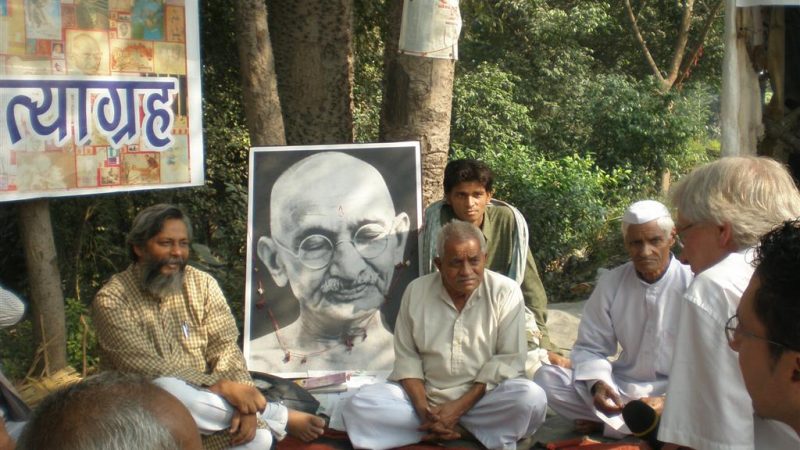
EVEN as the construction of the Commonwealth Games Village adjacent to the Akshardham Temple is in full swing, members of the Jal Biradari organisation are in no mood to quit and have vowed to continue their agitation.

Stop Killing Yamuna
A sticker at the Protest Site

Led by the waterman of India, Rajendra Singh, the protest has been going on since August 01, 2007. The satyagrahis, as they like to call themselves, are demanding immediate halt on all construction activities on the Yamuna floodplains. They are also urging the Delhi government to shift the Games Village site to elsewhere.

Yamuna Satyagrah Protest Site

Yamuna Satyagrah Camp

Such is the determination of the satyagrahis that they actually mock at all the construction work going on there. They are sure that their protest will ensure the restoration of the river bed and bring down all such constructions. “Sarkaar fir bhi paise barbaad kar rahi hai,” (after all, the government is just wasting its money), said Rajendra Singh.

Referring to the Akshardham temple, he also stated that the present government would repeat the mistake of the BJP led NDA government, if it lets the Games Village to come up on the Yamuna floodplains. A banner announced boldly, “Yamuna mein to ped lagenge, Khelganv-Metro Depot kahin aur banenge” (Trees will be planted in the Yamuna floodplain, Games Village/metro depots will be built elsewhere).

Mr. Rajendra Singh - waterman of India

Rajendra Singh being interviewed by the Swiss Media

The Yamuna Satyagraha has seen support from almost all environmental organisations, students and concerned citizens from all over Delhi. The protest itself includes people from all over India. Noted personalities such as Vandana Shiva, Prof Vikram Soni, Radha Bhatt (Chairperson, Gandhi Peace Foundation), senior journalist, Kuldeep Nayar, ornithologist, Anand Arya, members from Kalpvriksha NGO, Diwan Singh of the Ridge Bachao Aandolan, and Manju Mishra have all extended their support for the movement.

Banner at Protest Site

Sensitizing the people of Delhi about R. Yamuna

The Satyagrahis are planning a protest march soon, right from Yamunotri to the protest site, to generate awareness towards protection and rejuvenation of river Yamuna.

The following article was written over two months ago for Merinews.com after a trip to the protest site was made along with the Swiss Media.

The Protest is being followed up…

Comments (4)

Delhi Sustainable Development Summit

The World Sustainable Development Forum’s India chapter - Delhi Sustainable Development Summit (DSDS), organised every year by The Energy & Resources Institute (TERI) will take place from 7th to 9th Februrary, 2008.

DSDS 2008

The DSDS (Delhi Sustainable Development Summit) is an annual event which has become the most important gathering of leaders drawn from various parts of the world concerned about global sustainable development.

According to the Intergovernmental Panel on Climate Change(IPCC), ‘Sustainable development can reduce vulnerability to climate change, and climate change could impede nations’ abilities to achieve sustainable development pathways’. The problem of climate change is global requiring a collective solution, which has developed as a consequence of intensified unsustainable patterns of development since the beginning of the industrial revolution.

Hence, to address the problems of climate change DSDS 2008 will focus on “Sustainable Development and Climate Change”. The two processes of the Fourth Assessment Report of the IPCC as well as of the 13th CoP (Conference of the Parties) under the UNFCCC (UN Framework Convention on Climate Change) will add great value in the deliberations of DSDS 2008 which will benefit from leaders of public opinion and global stature who will contribute to the substance of the discussions towards a post 2012 era.

Click here to download the DSDS 2008 Brochure

Click here to know more and to fill the Registration Form

Comments (1)

Our National bird..at the first PM’s residence!

A peacock walks by a banner at the Teen Murti Bhawan, raised to remind us of our ‘unity in diversity’ and calls for greater tolerance and  respect for others - which has been the roots of this great Nation!

Peacock at Teen Murti

The lush green lawns of the first Prime Minister’s residence host a very large number of peacock population, which can be seen together particularly during evening.

Comments

Delhi’s underground workforce: Trees!

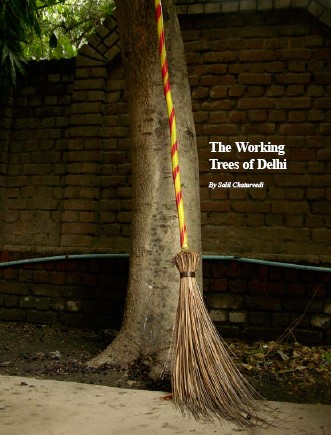
The Working Trees of Delhi!

“Not sure about my Hindi credentials – long hair and a Ferrari-red Santro don’t help much either – he explains with a touching indulgence that while living one needs trees, when one is dead one needs the help of a tree for the onward journey; this then is the strange spectacle of a tree.”

…is how Mr. Salil Chaturvedi begins to explain the invisible role played by the trees in Delhi.

Working Trees of Delhi

He rests his case with…

I can’t help but wonder, in this urban landscape, to whom does the tree belong? To the government that plants them? To the intended beneficiary: the citizen of the city? Or to the tinker or tailor who sets up shop under it? I wonder what the tree would have to say on the matter.

Click here or on the image above to read/view the short and brief story of the Working Trees of Delhi by Salil Chaturvedi

Comments (4)

Invitation: TOG Seminar on “Sustainable Development: Post Bali”

The Oceanic Group (TOG), a non-profit society dedicated towards awareness building on Environment & Health issues had launched a Bimonthly Interactive Seminar Series on Climate Change (CC) on 4th of June, 2007 in collaboration with the India Habitat Centre (IHC). The presentations at the seminars are to be edited and compiled in the form of a book to be launched on the next World Environment Day.

The fourth edition of this series will take place on Tuesday, 18th December 2007.

The fourth seminar is being chaired by
Mr. Mani Shankar Aiyar,
Honorable Minister for Panchayati Raj and Youth Affairs and Sports,
Government of India

and the distinguished speakers are
H.E. Mr. Charles Richard Vernon Stagg,
High Commissioner, British High Commission; and

Dr. Jyoti Parikh,
Executive Director, Integrated Research and Action for Development (IRADe).

The Programme would roughly be of 100 minutes.

Seminar Topic: ‘Sustainable Development: Post Bali’
Date: 18th December, 2007
Time: 6.30 PM
Venue: Gulmohar Hall, India Habitat Centre, Lodhi Road, New Delhi

A book titled “Local Environmental Governance in India” published by Lead India in collaboration with the British High Commission will also be released on the occasion.

download Download Invitation

For more information, contact

Govind Singh
Joint Secretary
The Oceanic Group

Comments (2)

Sambodhi: Project Monitoring and Evaluation Training

Sambodhi

Sambodhi - an initiative catering to research and allied service needs of the social sector for design and development of state-of-art knowledge ware products and provision of knowledge-based services is organising a training programme for trainers!

Programme title: ‘Inclusive Monitoring and Evaluation of Development Projects’
Duration: 4 days, From 17th to 20th December 2007
Venue: New Delhi

The training is aimed at augmenting knowledge and skills of operational and middle-level functionaries in various organizations implementing projects and involved in participatory monitoring & evaluation functions.

Specifically, the training is aimed at:

  • Providing conceptual clarity for facilitating better understanding of Stakeholder Centric Monitoring and Evaluation approaches
  • Developing requisite skills for factoring in Participatory Monitoring & Evaluation (PM&E) in Project design and developing Inclusive Monitoring and Evaluation frameworks
  • Enhancing knowledge base and develop skills for application of participatory methodologies and tools especially PRA for monitoring and evaluation
  • Augmenting knowledge and skills for facilitating analyses and interpretation of Participatory Monitoring and Evaluation information

Upon completion of the training programme, participants would better appreciate PM&E concepts, design and roll-out Inclusive monitoring systems and evaluation studies, facilitate analyses and interpretation of PM&E information; and present analyses in user friendly formats for informed decision-making and dissemination

Fees: The fee for training programme is Rs. 10,000/- per participant which includes tuition fee, reading material, lunch at the training venue and other training expenses.

Interested individuals/organisation can check out the Flyer for the programme containing more details by clicking here.

For more details, please contact:

Rajata Nayak,
Senior Executive,
Sambodhi Research & Communications,
H-35 A, LGF, Kalkaji New Delhi-110019
+91-11-40560734, 65492502

Comments (1)

Chai, Charcha… and Change

The Youth Collective, a newly formed collective focusing on promoting involvement of youth in social change, is looking for young people to initiate and be part of the ’Commutiny‘. 

Commutiny

Commutiny is a year-long fellowship programme offered by The Youth Collective to support young people strengthen their passion for creating a better world, ignite change within their own selves and lead social change on their own terms.

As a Commutiny Fellow, young people will gain platforms to question, understand and explore complex social issues and analyse their effects on human and natural worlds. They will gain opportunities to work closely with other young people who have similar passions and be navigated by leaders in the social sector and other fields.

Communtiny Fellows will also avail of a year-long financial support (between May 2008 and April 2009) to implement a social change initiative that they are passionate about.

The Collective is encouraging young people who have already been making a difference in their communities and young people/youth groups with ideas of change initiatives that address issues of particular concern to the young to apply.

Who Can Apply

A: YOUNG PERSONS between ages 20-27,

  • who have a deep interest to get engaged in social change processes
  • who already have experience of setting up or being involved in a social change project or have volunteering experience
  • who have already demonstrated social change initiative/s on the ground.

B: YOUTH GROUPS (where members are between 20-27 years of age), which are already making a contribution towards social, environmental and development problems and issues that face their communities, their country or the wider world.

C: WORKING PEOPLE between 20 and 27 years, who have been nominated by the voluntary organisations where they are working.

All applicants must have:

  • proficiency in Hindi or English
  • ability to commit 1 year for fellowship work
  • openness to learn
  • ability to ‘walk their talk’
  • spirit of collaboration
  • intent to dialogue
  • appreciation of the principles of diversity and non-violence
  • commitment of the head, heart and hands to issues of social concern

Last Date for applying: December 15th, 2007

For more information, contact

Durba Ghose / Ashraf Patel
Pravah, 2nd Floor, C-24B, Kalkaji,
New Delhi 110019
Tel: +91-11-26213918/26440619/26291354
EMail: applications@commutiny.in

Comments (4)

Corporate Houses and Environment

From the pages of IndianWildlifeClub.com

Organizations and corporate houses around the globe are increasingly recognizing the importance of demonstrating transparency and accountability beyond the traditional domain of financial performance. A primary reason for this is an even greater increase in public expectations from organizations and industries to take responsibility for their non - financial impacts, including impacts on the environment and on the community. Consequently, environment has taken the center stage and the western ‘green’ wave of the sixties is more powerful now than ever before.

The industrial sector is largely governed by the market which works using sound economic principles. However, the ‘green’ wave of sustainable development……Click here to continue reading this article…

Comments