Archive for January, 2009

International Essay Competition on Climate Change

WANTED: The Next Generation of ‘Green’ Entrepreneurs

Essay Competition on Climate Change

The World Bank and its partners invite youth between the age of 18 and 25 years of age, to share their ideas on:

  • How does climate change affect you?

How does climate change affect you, your country, town or local community? How do you think it will affect you in the future? Think about the consequences for employment, health, security and other areas of your life.

  • How can you tackle climate change through youth-led solutions?

What can you do, working together with your peers, to address the problem of climate change in your country, town or local community? Think specifically about the role of youth-led initiatives in the ‘green economy’.

Climate change has been identified as one of the biggest global threats of our time. Scientists agree that global warming and extreme climate phenomena can be increasingly attributed to human activity – in particular, heavy emission of greenhouse gases, such as carbon dioxide, resulting from industrial processes.

Solutions to those pressing problems could lie in the rapidly growing ‘green economy’: environmentally sustainable enterprises, technological innovations (new sources of clean, renewable energy), energy efficiency measures, economic incentives for low-carbon choices etc. How can youth contribute?

Write your thoughts in an essay format, and (also) be eligibile to win a maximum prize of $3000! Submissions are now open, and this year for the first time the Essay Competition also invites the submission of short videos and photos!

Click here to apply! (Best of Luck)

Comments (3)

Blue Green Delhi

Delhi Greens

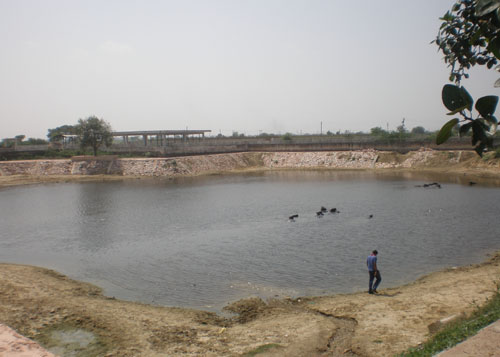
Lovely, clear, warm, winter morning, temperatures in the tweens, a public holiday…. What does an average teenager from a local Basti do, on a day like this in Delhi? To my surprise I found out that he heads out to the local pond or lake. With a loaf of (local bread) Pav, a nylon twine, a fishing hook and some earthworms, he is all set to spend a lazy afternoon away from the Basti and yet be well fed at no extra cost.  The fish he gets, if small is used as bait. The big fish is roasted on open fire of twigs or eaten raw along with the Pav. Sounds like a great day out right?

So my curiosity aroused and I surfed the internet. After all we all talk of Clean and Green Delhi, surely these lakes ponds would be listed and plus there is Yamuna and plenty of ground water so these water bodies do not dry completely. To my surprise while Hyderabad boasts of 263 lakes protected by the state Delhi has five lakes listed. No location wise listing of Yamuna or Ganga or its tributaries, canals that allow for green spots.

While a casual visit to the vicinity of water body near my residence and other places, show that the water fronts and water bodies, however small or big, are an integral part of the local culture and very people friendly spaces. Here migrant Bihari farmers farm for up to 8 months and grow fodder and flowers, local fishermen fish, Dhobis routinely wash clothes. Herds’ men take buffalos to sit in the collected water and bathe them before returning home. These are all forming an integral part of the culture, ecology and the environment. Just in my neighbourhood within walking distance there are at least seven water fronts. But only one among them, Sanjay Jheel is listed in the Gazetteer.

I learnt that due to a bilateral funding agencies’ interest in conserving water bodies in Hyderabad- located in semi arid region, a project was taken up by the Hyderabad Urban Development Authority (HUDA) that also involved. These 263 lakes/ ponds were the ones, they were able to salvage from the real estate boom that the city saw. Historically these were irrigation ponds created by putting Bunds on flowing river/streams and occupied portions of both public and private lands. HUDA notified them in the Gazette to protect them, cleaned them, and created Nurseries and small parks, to make Hyderabad a Green and Blue city. Without the Gazette Notification all would have got lost. It is not too late for us to think this for Delhi…

Comments

Republic Day Greetings

“We must look at better management of our forests, which have a wide diversity of flora and fauna including medicinal plants. They can be important in generating social, economic and environmental benefits for the country…….

……India has been impacted by the global environment. However, our economy has the fundamental strength and resilience to remain on course for economic growth…..We are seeking to address inequities in the growth process through an inclusive approach that brings within its ambit all regions and all peoples……Rural development can be a very effective vehicle for spreading the benefits of balanced growth…..

…..The youth represent the hope for the future and are an invaluable asset to the nation. Their hopes and aspirations for growth and prosperity are indeed the aspirations of the nation itself……In addition to self-development, they must pledge to abjure violence and work for the welfare of humanity.

- Excerpts from the speech of H.E. The President of India, Shrimati Pratibha Devisingh Patil while addressing the nation on the eve of the 60th Republic Day.

A day full of pride to all!

On being an Indian

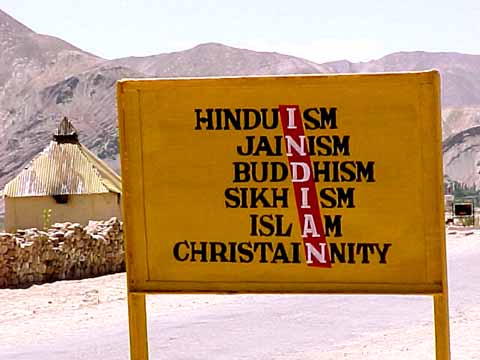
On being an Indian...

Comments

Localized Carbon Emission Control

EnvironmentThe 80’s was the decade of the ‘Bits and Bytes’ and 90’s was the decade of ‘Bugs and Plants’. 2000 can be seen as the decade of ‘Climate Change.’ While Climate Change is ‘authentic’ but the fear of climate change is ‘in-authentic’-which is stopping us from taking action. We do have limited actions. For example in India, we do have, HSBC working with small Machine Engineering industries promoting small scale industry to improve fuel efficiency through new investments. We do have some prominent NGOs like IRADE promoting awareness, TERI promoting environmental friendly technology initiatives through awards, and Development Alternatives and Centre for Science and Technology promoting environmental causes, located in Delhi but these are not enough.

Right now Solar power is the best bet, but the cost of coal to solar power production is 3:20 for producing electricity. We do need money for taking this agenda further. But, with the global recession, the R&D money is drying up. A forward transfer through tax in developed world is a better way at ensuring corporate governance. It ensures a ‘Win Win’ situation. Otherwise climate change policies are regressive however the tradable quota may be allocated. Those left using the polluting technologies, would always be the poor be it country or people within a country, and therefore last ones to adopt it. Therefore they will be the ones who will always have to pay a higher price for pollution reduction measures. Those who are responsible for it, may already have moved, on leaving the mess behind.

There are enough measures tried with other pollutants in other countries that we can think of. Just to quote two examples: Treating environment as a limited rental space for use and collecting cumulative tax from industry and redistribute it to the population at large for corrective measures is possible. Creating a Superfund for localised space like Delhi NCR, to be used by those who are currently suffering the consequences, seems only fair. Alternately issuing tradable permits for quota allocated to each industry is the first step, which then can be traded. It was used to bring down Sulphur Dioxide from power plants and automobile fuels in USA, why not carbon dioxide from the atmosphere in NCR? After all we did change to CNG…..

Comments

A Reva Car to 350, a Hopeful India Climate Solutions Road Tour

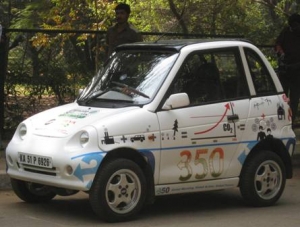
The 350 Reva The India Climate Solutions Road Tour has been on the drive. Starting from the southern IT city of Chennai, the tour has now already crossed Banagalore and Hyderabad while also visiting several smaller towns and villages – and is now on its way to the beautiful city of Pune in Central India. The tour has seen tremendous success and has been received by everyone with much warmth, and affection.

Everyone, right from the village folks, the town and city people, the petrol pumps where the electric cars were charged, to the IT parks and the universities that the Road Tour touched – not only appreciated the efforts made, but also promised to do all in their capacity to bring down their emissions and make others aware of it as well.

Driving in Reva, a hope-giving electric car with 350 painted all over, the road tour has been a successful initiative so far, in that it has been a reassurance to all those who have been tirelessly working to be the solution. At the same time, it has also been an inspiration to many, most of whom were keeping away from initiating action on climate change, simply because they did not see others doing it, or they did not know who to connect to for taking action. The road tour has, on its way, touched base with all those who are working towards climate solutions and also with those who want to work towards the same.

First Posted on 350.org

The India Climate Solutions Road Tour will soon be visiting Mumbai – the financial capital of India, Goa, Ahmedabad and will reach New Delhi after driving through the beautiful desert state of Rajasthan! – http://indiaclimatesolutions.com

Comments (2)

Inauthentic Fear of Climate Change

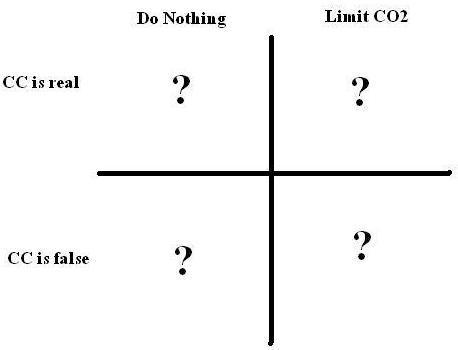
Climate change is ‘authentic’ but the fear of climate change is ‘in-authentic’ and we seem to be stuck in this ‘fear’. Climate change is happening and it will have impacts. The fear and uncertainty about the impacts of climate change is causing resistance to actions on ground, to translate this reality, into doing something about it. Climate change is not a problem, resisting climate change is. Being in denial of this reality and the impact it has on people and communities in our life, is a problem because it stops specific actions that need to be taken quickly and urgently, from happening.

Climate Change Uncertainity

We are all sitting twiddling our thumbs about this problem by resisting it. Out resistance to the reality of climate change as a Global community is manifest in intellectual conferences, where we are raising and debating all kinds of questions, for which we do not have answers. What should be done? Who needs to be doing it? Who will pay for it? and so on and so forth. It is driving the discussions in scientific forums, policy forums, that I had access to, in and around Delhi over the last two years. But there are no emergent agendas for action that have emerged out of these conferences and the debate continues….

The first step is to declare that there is a problem and to be present to the impacts that this has had on people and communities. To this end the conferences help but the real need is to choose to make a difference. The sooner we accept we have a problem and we have impacts the quicker will we take actions.

My concern is this inauthentic fear of climate change has stopped any concrete action being taken. As against this crisis of climate change and its impacts, over the last two years the world is facing another crisis of economic recession where actions have been swift and prompt. There is example of the developed world coming together for facing the challenge of recession quickly. In response to global recession the G20 plus countries met recently, and agreed on a five point agenda to fight world recession. G 20 Plus countries’ 5 point agenda is: general principals of transparency, knowledge sharing of the recognition of risk and its reduction, building confidence, international co ordination putting systems in place, Multi lateral institution building and Inclusive Governance.

The document is an epitome of the possibility of being ‘One’ in fighting for our survival as human beings and together fighting a global calamity of recession. We need this for climate change, more of this next week.

Image adapted from Free Radicals

Comments

Wanted: A More Intelligent Green Design!

Green Gadgets and Core77 invites all to generate outstanding design innovations for greener electronics. Designers are invited to explore the concept of “Greener Gadgets” to create the greenest blueprint solving issues behind energy, carbon footprint, health and toxicity, product lifestyle or social development.

Core77 Greener Gadget Design CompetitionChallenge: All you need to do is – Make a short (maximum 200 words) description of  project separately and include text in the composition of images.

Designs should seek to minimize the environmental impact of consumer electronic devices at any stage in the product lifecycle. Designers can focus on a particular area of human enterprise (learning, playing, communicating, etc.), or a particular context (work, home, school, etc.), a particular material, or a specific device. Areas of sustainability to consider include energy, materials/ lifecycle/ recycling, social impact, and educational development.

Once they receive your idea, they will send you an action plan and help you plan your project well. Then present your project to a panel of mentors to receive feedback and advice. Once approved, you will receive your grant, and you are then ready to launch your environmental venture. Do it!

Eligibility: Open to all designers, students and enthusiasts
Deadline: January 15, 2009 to submit the project idea

Other Important Dates:

  • Semi-Finalists showcased in online gallery for voting and commenting: February 1, 2009
  • Finalists showcased at Greener Gadgets Conference. Winner and Runners Up selected: February 27, 2009

GRAND PRIZE:
The top 50 entries will be published on the web for voting and commenting, and top finalists will be showcased live at the Greener Gadgets Conference in New York City on February 27th for judging by an expert panel. The Grand Prize for this year’s competition is US$ 3,000, with Second and Third Prizes of US$ 1,000 each.

For more information, log on to www.greenergadgets.com

Comments

Report Launch on Mountains of Concrete: Dam Building in the Himalayas

Invitation to Report Launch


Shripad Dharmadhikary of Manthan Adhyayan Kendra will present his study on dam building in the Himalayas: “Mountains of Concrete: Dam Building in the Himalayas”. It discusses the linkages between climate change and dam-building in the Himalayas, and comprehensively analyses the impacts of the dam building spree on the region’s people, ecosystems, and economy.


Nyishi Tribal Arunachal Pradesh

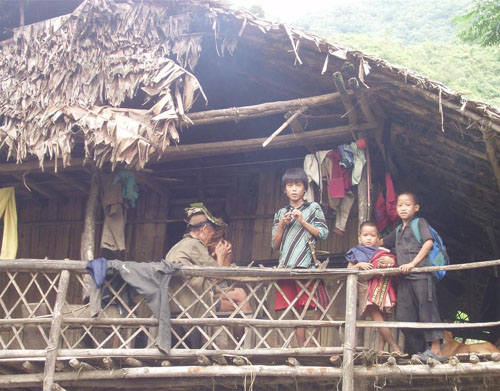
A Nyishi tribalfolk house in Arunachal Pradesh -  a state who’s hydroelectric potential is being ‘exploited’ in the name of development.


The meeting will be chaired by Shri Ramaswamy Iyer, former Secretary, Union Ministry of Water Resources, Govt of India. Ratan Bhandari from Water & Energy Users’ Federation Nepal will present the impacts of the India-driven hydropower program in Nepal.


Key Speakers: Shri Surya P Sethi (Principal Advisor (Energy), Planning Commission) and Shri Mahesh Rangrajan (University of Delhi).


Date: 12th January 2009

Time:  2.30 pm to 5 pm

Venue: India International Centre (Annex), Conference Hall-3 40 Max Mueller Marg, New Delhi 110003, India


“Mountains of Concrete” is published by International Rivers and can be downloaded here. Hard copies will be available at the launch.


After the launch meeting and tea break, please do stay back for the first ever screening of a 33 minute documentary film “Rhymes and Reasons of Confrontation” on the people affected by the proposed 3000 MW Dibang Hydropower project in Arunachal Pradesh.


For more information and to confirm your participation, please contact:

Swarup Bhattacharyya

swarup.bhattacharyya@gmail.com.


Selected key findings and questions from the report:

Read the rest of this entry »

Comments

Why Vultures Matter? Part II

I talked about IPCC’s contribution in converting the fear of failure of cities as a ‘some day not now’ phenomenon into a right here right now reality. What does this reality look like for our city of Delhi, no doubt a mega city.

Delhi NCR region generates solid waste to the tune of 45,393 tonnes per year. Air pollution levels while are within limits now, are still high. Especially in winters due to inversion, the fog that we have experienced over the new year week, is partly Smog due to vehicular pollution, inspite of actions taken for clean fuel use through CNG.

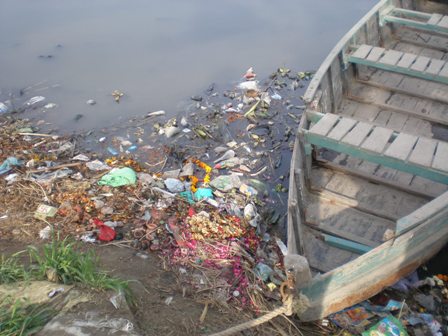
River Yamuna in Delhi

River Yamuna in Delhi

Yamuna river waters that enter the NCR region, consumed at 150 liters per capita per day, leaves it polluted, as only a small part with only 1153 million litters per day are treated. What will happen to the city over time? It may crash under its own weight, due to mismanaged water sanitation power transport, in short breakdown in urban infrastructure. The present way of doing it, is not sustainable over time.

Small decentralized communities producing their own sustainable power, water and managing their own municipal solid waste sustainably, is suggested as a solution, even within Mega cities. It still leaves the settled community having to deal with dead animals. Today carcasses removal is contacted by our city government to contractors. One of the ‘small is beautiful’ solution to cadavers is Vultures, they are the only birds that eat flesh of dead animals and they pick very efficiently the cadaver clean to the bones. So every settlement needs its resident vultures with open spaces for them to live and food for them to feed.

The missing vultures of DelhiThe 48 C seminar in Delhi in December, made us present to ‘Doing’ something, even if it was an artistic representation of Vultures at FICCI Circle. It allowed for all of us to be present to the Vultures. It allowed us to take some time out and think together in partnership for a specific bird, the Vulture – how ever ugly you may consider it aesthetically and the linkages it has with the ecosystem, even though we continue to have our specific favorites for environmental actions.

Second Image by Deepak Acharya courtesy ExposeMaximum

Also Read:

Comments

Commonwealth Games Construction Prevents Students from Accessing University

If you thought the Commonwealth Games was constructing only on the floodplains of river Yamuna, here’s a piece of news for you.

Parts of the University of Delhi have now become inaccessible to the students of the university. Spaces that saw annual hosting of events, meets and get togethers are now busy being constructed upon and lost forever, for the Commonwealth Games 2010.

DUSU office bearer’s damage proctor’s office
January 6, 2009 | Hindustan Times

UNABLE TO secure permission to use the varsity polo grounds to host an annual fest, three DUSU office bearers allegedly vandalised the proctor’s office on Monday afternoon. Vice president Manohar Naagal: secretary Ashish Chaudhury and joint secretary Ashish Gahlot went over to Proctor Gurmeet Singh’s office and reportedly broke windows and tables. “All office bearers, except President Nupur Sharma, were the ones who resorted to vanadalism. The university cannot provide the polo ground for it’s being used for Commonwealth Games construction purpose,” said Deputy Proctor M.M. Raheman. The police have registered a case.

Comments

Click for New Delhi, India Forecast