Archive for April, 2009

Being Heard

Public gatherings

Given the election fever in Delhi there are lots of candidates who are projecting themselves as the best for the country. Different parties have different forums in which they are able to project a party image as well as their candidate profiles that would work for the country and its people.

Among this cacophony of various candidates and parties trying to make themselves heard–one voice of a national party on the radio really stands out. He is promoting himself using audio media very creatively. He has a very unique way of singing himself rhythmically on the radio. He has a whole rhyme about who he is, and what he stands for, and he even has a name rhymes with its surname, as Tarunsing Tawar. At least I am curious to see what he looks like…

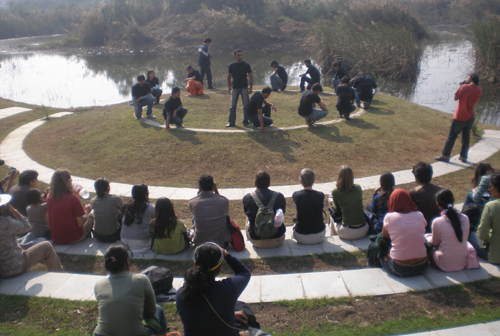
Whether that is enough to get him a seat in Parliament is anybody’s guess and time will tell if this strategy works or not. But that is not important. What matters is that he is able to make himself heard on a popular mass media over and above every one else and people will remember him for a long time, irrespective of his winning. Being heard is as important as actually taking the actions, to bring about the ecological change that our city needs or we want to promote.

Read the rest of this entry »

Comments (1)

350.org: Delhi Staff Annoucement!

350 dot org, 350.org looking for delhi staff

350.org is an international grassroots campaign that aims to mobilize a global climate movement united by a common call to action. By spreading an understanding of the science and a shared vision for a fair policy, 350.org works to ensure that the world creates bold and equitable solutions to the climate crisis.

In preparation for an International Day of Climate Action this October 24, we are looking to hire a Delhi-based staff member to join our South Asia team to help us connect with new partners across the region, develop and maintain more online communities in the region, and work with our intern team to recruit and support event organizers in the region. 

South Asia Co-coordinator – Delhi, India
Duration: June – December, 2009
Stipend – Attractive and Negotiable

Responsibilities will include: outreach to organizations and ongoing partnership development; communication with event organizers; social networking outreach; materials development; translation and interpretation; intern and volunteer management; communications with media outlets; communication and coordination with the global 350 team; possible regional travel and presentations; and more. An ideal candidate for this position will have a variety of skills, including:

  • Multi-lingual (at least one South Asia Languages on top of English, preferably more)
  • Excellent communication (both oral and written) and people skills;
  • Experience working as part of a team;
  • Experience working for social change;
  • Experienced presenting on the subject of climate change and social change;
  • Capacity to multi-task and work nimbly, balancing multiple priorities and interruptions;
  • Understanding of, interest in, and experience with projects that have a focus on sustainability, social change, advocacy. A knowledge of environmental activities in different countries is a major plus;
  • Experience with volunteer management;
  • Experience with online communications tools and websites;
  • Translation and interpretation experience is a plus;

More than anything, we are looking for multi-lingual candidates who are willing to work hard for a cause they believe in. As a 350 staff member, you’ll be joining an international team of young organizers. Whether you are interested in environmental politics, non-profit management, translation and interpretation, or online advocacy, we will be able to help develop your skills over the course of the 6 months and introduce you to new opportunities in any of the aforementioned fields.

We strongly encourage all applicants to have access to their own Internet-enabled laptop or computer that can remain in a 350.org office in Delhi.  If that is not an option for you, but you are still interested in the position, please just let us know.

Applications, including a resume a brief letter explaining your interests in the campaign, must be submitted to jobs@350.org as early as possible.

Comments

350.org Recruiting Multi-Lingual South Asia Organizing (Paid) Interns

They call it “global” warming for a reason. Over the next 8 months, 350.org aims to spark a truly international movement to confront the climate crisis. The 350.org team is composed of organizers from every continent (except Antarctica) and we work with hundreds of organizations around the world. In preparation for an International Day of Climate Action this October 24, we are looking to hire a number of Multi-lingual South Asia Organizing Interns to help us recruit and support event organizers in the South Asia region.

350 Because the World Needs to KnowMulti-lingual South Asia Organizing Intern
Location: Delhi, India
Duration: July – October, 2009
Stipend – $400 US/month (approx. Rs. 19,200/-)

Responsibilities will include: outreach to organizations in their native language; communication with event organizers; social networking outreach; materials development; translation and interpretation; and more. An ideal candidate for this position will have a variety of skills, including:

  • Multi-lingual (two South Asian Languages on top of English)
  • Excellent communication (both oral and written) and people skills;
  • Experience working as part of a team;
  • Capacity to multi-task and work nimbly, balancing multiple priorities and interruptions;
  • Understanding of, interest in, and experience with projects that have a focus on sustainability, social change, advocacy. A knowledge of environmental activities in different countries is a major plus;
  • Translation and interpretation experience;

More than anything, we are looking for multi-lingual candidates who are passionate and are willing to work hard for a cause they believe in. As an intern, you’ll be joining an international team of young organizers. Whether you are interested in environmental politics, non-profit management, translation and interpretation, or online advocacy, we will be able to help develop your skills over the course of the summer and introduce you to new opportunities in any of the aforementioned fields.

We strongly encourage all applicants to have access to their own internet-enabled laptop or computer that can remain in a 350.org office in Delhi.  If that is not an option for you, but you are still interested in the position, do let us know in advance.

Applications, including a resume and a brief letter explaining your interests in the campaign, must be submitted to jobs@350.org latest by April 26, 2009.


Comments

Earth Day 2009 at Chacha Nehru’s House!

Moving the Earth on its Day

Moving the Earth….on her Day!

(Launch of  Green Generation Youth Delhi Environment Action Network)

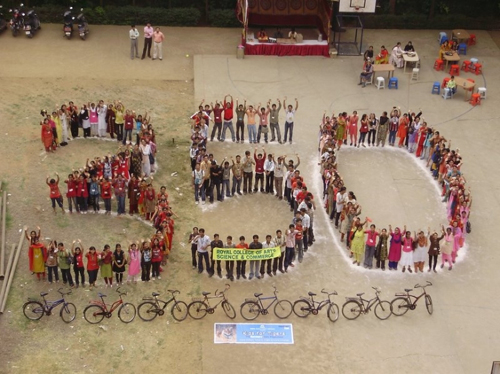
Earth Day 2009 was celebrated today by Development Alternatives (DA), Nehru Memorial Museum & Library (NMML) and the Ministry of Environment & Forests (MoEF) at the NMML with much energy and enthusiasm. Over 300 school children participated from over 20 schools that made the entire NMML come to life. Earth Day caps and T-shirts were distributed to students upon their arrival at the NMML and they were each given a group number. After a brief welcome address in the auditorium, the children were introduced to their group coordinators who took them to a pre-decided place, to carry out the respective activity that had been chosen by children.

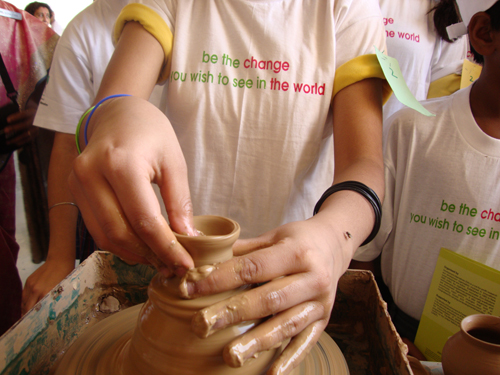
Everything from Nature Craft, Nature Painting, Making newspaper bags, Pottery, learning the Charkha to jingle making were the range of activities that the children were involved and engaged with. Each group came up with innovative and unique ideas and put them to use in order to make something useful and in the process, gave expression to their creativity. The groups were visited by Mr. George Varghese, President of Development Alternatives, Ms. Usha Srinivasan, Chief Coordinator of the Clean India Programme of DA and a Joint Secretary from the Ministry of Environment & Forests (MoEF) who was also the Chief Guest for the day.

The school children then reassembled in the auditorium. The stage was managed by Ms. Usha Srinivasan who called upon Professor Mridula Mukherjee, Director, NMML, Mr. George and the Chief Guest to give a short speech to inspire the children. Ms. Srinivasan also announced the launch of the Green Generation Youth campaign and the Carbon Footprint calculator CD. The day concluded with each student group presenting their creation, and with a musical concert by the children themed on Green Generation Youth!

The day also marked the the launch of the Delhi Environment Action Network (Delhi-EAN) by Govind Singh of  Delhi Greens and Padmavati Dwivedi of Compassionate Living as a Network of concerned citizens of Delhi and the various civil society organisations based or working in Delhi. A programme of the Development Alternatives, the Network is being revived by various civil society groups and citizens of Delhi, as a strong need for such a platform has now arisen and as a response to the onslaught on the trees of Delhi, the dying status of river Yamuna, the polythene and waste mess in the city, and the transport and mobility crisis.

The Delhi-EAN will carry out well researched green actions from time to time, that it feels are necessary in the best interest of the city. The Network will share useful information, court hearings, environmental laws, notifications, acts etc. pertaining to Delhi and its environment. In addition, the Delhi-EAN will collect, share and distribute resources, contacts, skills and knowledge with an underlying objective of a clean and green National Capital Territory.

Comments

The Challenge of Cleaning the Yamuna

River Yamuna Delhi

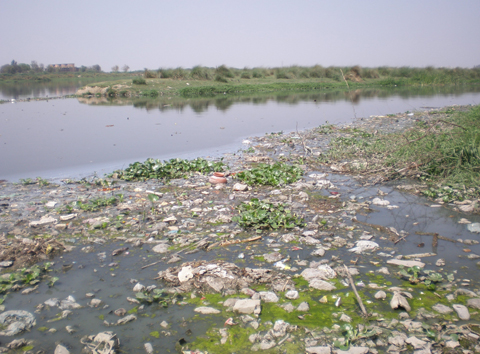
Yamuna River passing through the city of Delhi is the main source of drinking water supply to the city. Seventy percent of water supply for drinking water in the city comes from this river. While bulk of the water for drinking comes from Yamuna River as much as 3,538 metric liters of waste water flows through 19 drains out falling into the river every day. Rivers have an automatic rejuvenation quality naturally provided and at any given time 10 percent of the volume of water is flowing and not stagnant. But Yamuna suffers from inadequate flow and quantum of water.

It is not want of spending money, as much as Rs. 1200 cr. worth of efforts were spent on Yamuna Action Plan Phase I (YAP I) and Yamuna Action Plan Phase II on creating the infrastructure in treating the waste water that gets generated per day in the city. Setting up of Sewage Treatment Plants (STPs) along 42 towns and cities in the upstream of the river was part of the YAP I, while the Phase II was mainly focused on Delhi Metropolitan city. Serious deficiencies and backlog in sanitation and waste water services has resulted in the dwindling of water flow as this is 80% of the source of pollution in the river. The main challenge in Phase II was to ensure that the waste water coming from the development of informal housing along the river bank is provided with sewage and sanitation collection network. This proved to be an extremely difficult challenge for Municipal Corporations within the Delhi Metropolitan region. Read the rest of this entry »

Comments

Earth Day Celebrations at the Nehru Memorial Museum & Library

More than 300 school Children to begin the Green Generation Campaign on Earth Day April 22

Nehru Memorial Museum & LibraryEarth Day will mark the beginning of the Green Generation campaign on April 22, 2009 when hundreds of children from schools across Delhi will gather at the Nehru Memorial Museum & Library (NMML), Teen Murti House to demonstrate responsible green consumerism and pledge to take charge of their future on this planet.

The Green Generation campaign encourages children and youth to become responsible Green Consumers, understand urgent national and global issues such as climate change and water crises – make responsible choices and take individual action to make a difference.

Clean India Campagin DADr. Ashok Khosla, President of the reputed International Union for Conservation of Nature (IUCN) has given his consent to be the Chief Guest on the occasion and release the Green Booklet with tips on how to become a Green Consumer (including a carbon emission calculator in the CD format), prepared by Development Alternatives (DA). His presence will guide and motivate the children to be the agents of change.

Date: April 22, 2009 (Wednesday)
Time: 0900 am to 1230 pm
Venue: Auditorium, Nehru Memorial Museum & Library (NMML), Teen Murti Bhawan, New Delhi – 110011

Chief Guest: Dr. Ashok Khosla, President, International Union for Conservation of Nature (IUCN).


MoEF LogoThe Day will also mark the launching of the Delhi Environment Action Network (Delhi-EAN) as a civil society initiative to involve and engage the citizens of Delhi in the sustainable development of the city.

The CLEAN-India Programme of DA has been celebrating Earth Day every year in different CLEAN-India cities and towns and in Delhi with the Ministry of Environment and Forests, Government of India, addressing different critical environmental issues.

This year, CLEAN-India in collaboration with NMML (Nehru Memorial Museum and Library) proposes to celebrate Earth Day 2009 with the theme “Be a Green Consumer – Reduce Your Ecological Footprint”. The purpose of the campaign will be to create awareness amongst school students on the growing gaps between the bio-capacity and ecological footprint and to instil in them the consciousness and skills to understand the current scenario and take action.

The students would be given different exciting activities to work on like Paper Bag making, Pottery, Charkha, Nature Craft etc. A Musical band performance by the school children on the song Green Generation would follow the activities. All this would encourage them to be responsible Green Consumers.

Earth Day is a very special day for celebration, a day for introspection and reflection and a day to pledge to protect this one planet we have. Join us as we celebrate with our future generations and pledge with us to take action to prevent the rapid depletion of earth’s resources.

For further information, please contact:

Ms. Soma Biswas, Manager Communications, Development Alternatives

Tel: +91-11-26134103, 26890380 Fax: +91-11-26130817 Or

Mrs. Usha Srinivasan, Senior Advisor, CLEAN-India Programme, Development Alternatives


To volunteer and to participate, contact: Ayush (99682 49346), Govind Singh (98111 47754)

Comments

Funding Opportunity for Urban Youth Led Initiatives

Opportunity Fund

Urban based youth-led organizations in developing countries who are working to improve the living conditions of their communities can now apply for financial assistance from UN-HABITAT, the United Nations Human Settlements Programme.
 
The Opportunities Fund for Urban Youth-Led Development will provide grants between $5,000 and $25,000 to organizations led by young people, aged 15-32 years. 
 
“In this time of worldwide economic crisis, it is not only banks and automakers who deserve financial support, we also need to encourage youth who are often best placed to solve problems in their communities,” said Ms. Anna Tibaijuka, Executive Director of UN-HABITAT. “The Opportunities Fund is designed to provide financial support of up to one million dollars per year, to youth-led initiatives aimed at sustainable urbanization. We must harness the energies of the young if we are to overcome the problems of urban poverty.”
 
Of the one billion slum dwellers in the world today, it is estimated that more than 70% are under the age of 30. Yet these young people have few resources available to improve their own living environment. This is a major oversight as there are many youth-led initiatives in slums and squatter settlements that are in urgent need of financial support.
 
The Opportunities Fund for Urban Youth-Led Development has been established with support from the Norwegian Government specifically to provide funds to youth-led community initiatives. The initial grant is for two million dollars over two years with a possibility of renewal.
 
The fund is committed to support innovative youth-led projects in areas such as employment, education, environment, health and safety. Applications from organizations partnering with government agencies and the private sector are encouraged. Projects promoting gender equality are particularly welcome.
 
Applications details are now available at www.unhabitat.org/opfund. Last date for applying is 1st June, 2009

Comments (1)

Leadership Course on Conservation in Ranthambore!

Tiger Watch LogoWith a total of 10 years of experience in ground level conservation, anti-poaching, and rehabilitation work, Tiger Watch – a Non-Governmental Organisation working out of Sawai Madhopur - on the outskirts of the Ranthambore National Park in Rajasthan - has put together its experience and knowledge - invaluable for those making a sincere and serious effort towards conservation.

COURSE SCHEDULE

Duration: From May 20, 2009 to May 25, 2009

Program Schedule

  • Seven lecture sessions with prominent personalities who work at the ground level in various fields towards wildlife conservation
  • Two visits to Ranthambhore National Park for understanding the ecology of the tiger
  • A visit to the Chambal river bank to understand the ecology of Gharial
  • Visit to the Moghiya Tribe Education Program
  • Interaction with ex-poachers
  • Visit to the Prakritik Society
  • Visit to Hindwad Village of the Moghiya tribals

Program involves talks and close interaction with the following personalities.

Fateh Singh Rathore – Fateh has been fighting for tigers for 45 years now, 25 years of which were spent in the Indian Forest Service. Many tiger experts of today have looked up to  him as a pioneer and guru. Fateh is heading Tiger Watch and the wealth of knowledge he possesses is a guiding light for us in the field of conservation.

B.C. Choudhury – A leading gharial expert of India and a senior scientist at the Wildlife Institute of India.  He understands not just the gharial but also its habitat issues. Without habitat restoration, it will be impossible to save the critically endangered gharial population. The Impact Assessment Report submitted by him could stop the dam construction programme in the various tributaries of Chambal River.

Madhu Bhatnagar – A ‘Green teacher’ from Delhi. Madhu has undertaken the task of environment education for three Shri Ram Schools in Delhi. She has inspired and mobilized not just her students but also the parents to get involved in conservation activities. Her work for cleaning the Yamuna, rainwater harvesting and tiger conservation have created a difference in the world of conservation in a unique way. She is also the coordinator of Kids for Tigers, Delhi chapter.

Jay Mazoomdaar – A freelance journalist and a wildlife film maker. Jay’s understanding of India’s environment politics is unparalleled. Ever since he exposed the extinction of tigers in Sariska, Jay has been closely involved with governmental and non-governmental efforts for tiger conservation. He has also provided valuable insights into the future trend of conservation, environmental policies, strategies and impact.

Dr. Govardhan Singh Rathore – Prince Charles awarded him with the precious Ashden Award for renewable energy. Govardhan has spent 20 years in community conservation and reformed several villages. He runs a school for some 300 kids of Ranthambhore. He has helped plant more than 500 biogas plants to substitute firewood and reverse the impact of deforestation. Along with the community, he has planted about 4 lakh trees around Ranthambhore. Govardhan has also built a state-of-the-art 60-bed hospital for villages near the park area. He is a true icon in community conservation.

Dharmendra Khandal, PhD – With a doctorate in botany, Dharmendra is the country’s foremost spider expert, and a connoisseur of Rajasthan’s flora and fauna. Dharmendra has been working at the ground level for tiger conservation since the past 6 years. A futurist in anti-poaching and wildlife conservation, he has not just helped governmental aApplication for Conservation Leadership Coursegencies nab poachers but also established ethics and methodology in anti-poaching strategies. He has religiously taken up the work of rehabilitating poachers’ families.

Program Requirements:

  • Applicants must be 18 years and above.
  • The course is intended for people who are currently involved in conservation, students, wildlife writers, or simply those interested in wildlife conservation.
  • The number of participants will not exceed 25.
  • Participants have to make their own arrangements to reach Sawai Madhopur. The participants are expected to be present on May 20, 2009 i.e. the first day of the course.

Course Cost: Rs. 7,750/- (including AC accommodation for the course period, food, local travel, field visits and course expenses). Fee does not include travel charges to and from Sawai Madhopur.

Mode of Payment: Cheque or demand draft in favour of “Tiger Watch”

download file Download Application Form

Last date for registering: 7th May, 2009

For registration and details please contact:

Divya – 094623 92560
Email: tigerwatchindia@yahoo.co.in
Website: www.tigerwatch.net
Address: Tiger Watch, Maa Farm, Sherpur Khilchipur, Ranthambhore Road, Distt. Sawai Madhopur, Rajasthan 322001 

Why this program?

Read the rest of this entry »

Comments (2)

Oxfam India’s Climate Change Campaign: Palash Sen Live in Concert!

Euphoria Oxfam India campaign

This is to invite everyone to the premier launch of Palash Sen and Euphoria’s next big launch – ‘Payenge aisa ek Jahaan’ – a music video on climate change.  Composed and sung by Dr. Palsh Sen and directed by Akbar and Azam Quadri, this video song produced by Oxfam India hopes that the music video will impress upon the listeners and viewers the urgency to join Oxfam’s climate change campaign, learn and spread awareness on the issue and galvanise others to act at the national and global level to help lower emissions and adapt to the impacts of climate change.

Also present will be Oxfam India’s brand ambassador Rahul Bose who will urge the citizens to join the campaign against climate change.

Event Details:

Venue: FICCI Auditorium, Near the Mandi House Metro Station
Date: 17th April, 2009
Time: 6.30 pm onwards

Palash Sen and the music video launc

Passes available at:

  • People Tree Store in Regal Building, Connaught Place
  • India Habitat Centre – Lodhi Road
  • India International Centre – Lodhi Road
  • Planet M (selected stores)
  • Dilli Haat

Passes also available with Delhi Greens and with 350.org

Comments

The Day After Tomorrow?

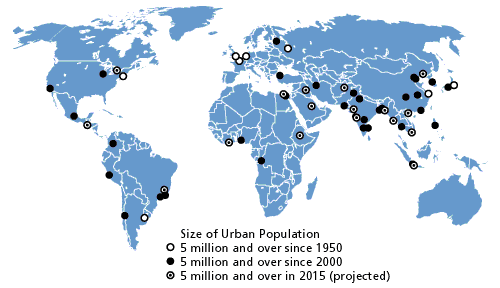
Historically megacities with the spread and population matching that of Delhi or Mumbai has been a very 20th Century phenomenon, mainly built by migrants. Until then the most stable human settlements have been agrarian villages, which were primary producers of agricultural products that took care of food, clothing, and locally produced tools and crafts. House or road contractions were community activities. Local trade in surplus or value added products were supported by trading centres that allowed for some exchange of goods and services. These were self sufficient administrative centres that served the neighbourhood villages.

growing urban population

It is now predicted that by 2020, 60% of the world’s population will be living in cities. In a situation like this ever thought if something like the ‘The Day After Tomorrow’ movie happens to our city of Delhi. For those not familiar with its story line, it is about what the world would look like if the greenhouse effect and global warming continued at such levels that they result in worldwide catastrophe and disaster, including multiple hurricanes, tornadoes, tidal waves, floods and the beginning of the next Ice Age. If we need to give up our cities and go away, what roots will we trace? What connections will we use to go back to?

The easiest answer is given by geography, ‘go back to States we came from’. But it is not so easy. Using the geographic connection to the states we come from may not be feasible or practical. We can at best trace our place of origin back to three generations. It is often quoted jokingly that if all the Malyalis decide to go back to Kerala there may not be any space left for people to stand in the state.

Besides some of us may have come from other large cities, then where do we go? This is very constraining.

Another option to trace our roots is ethnicity and cultural heritage. We can explore commonness of language, dialect, religion, sect, caste, creed, lineages, eating habits, values and beliefs, inheritances, wealth accumulation patterns, knowledge creating practices, you name it. This way of establishing our identities provides us with a very wide variety of options to choose from. Then we can choose to identify ourselves with an option or not, and take full responsibility for the choice we make, and enrol the people already to there, to accept us to live with them. This would avoid tensions and strive between the new comers and original settlers.

I do not know how these choices of ethnic identities, are made by individuals. Nor do I know whether these ethnic identities are fixed over time or are context specific. These are worth while research questions to explore, with significant policy implications.

Image Source: UN Study on Urbanisation 2002

Comments

Click for New Delhi, India Forecast